An empty detergent jug takes up almost as much room as a full one. You finish the detergent, put the bottle in the recycling or the trash, and buy another. In a household that runs several loads a week, it is a purchase you make over and over.
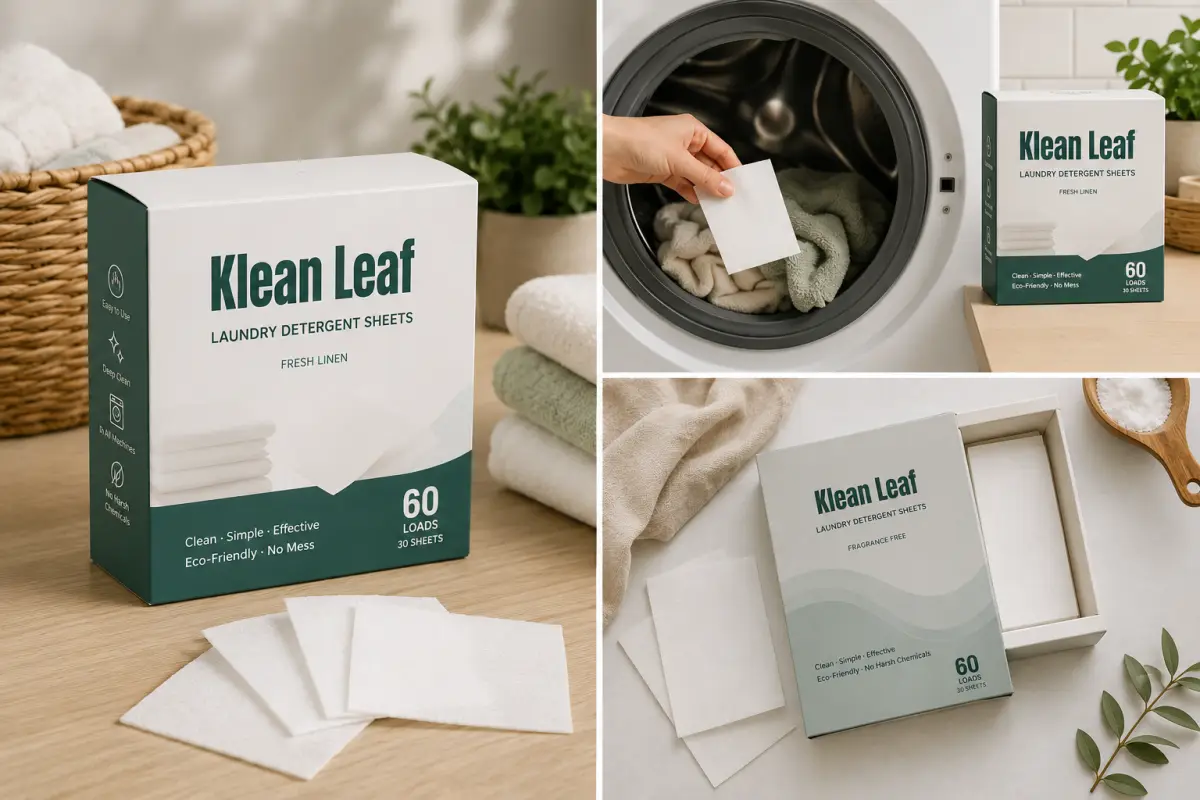
Laundry detergent sheets let you skip that jug. The detergent comes in a dry sheet that dissolves in the wash and can be packed in a small paper box or sleeve. For households looking to cut down on plastic packaging, that is the most direct reason to consider them.
Start with the whole package
A liquid detergent bottle has to contain liquid through shipping, storage, and repeated use. Sheets do not need that kind of container. Replacing the bottle and cap with paper packaging removes a source of plastic waste from something people buy throughout the year.
But open the box before judging the packaging. There may be a plastic pouch inside, an outer wrap, or a coating that is not obvious from a photo. Those details matter if reducing plastic is why you chose the product. For a brand ordering sheets, asking for a finished packaging sample is more useful than approving a picture of a paper carton.
Disposal needs some thought, too. Paper packaging still takes material and energy to make, and whether a particular pack belongs in the recycling depends on its construction and local collection rules. Plain, accurate instructions on the box help customers know what to do with it.
The difference shows up in storage and shipping
At home, the appeal is easy to see. A slim pack fits on a crowded shelf and is easier to carry to a shared laundry room. A few sheets can go in a travel bag without the worry of liquid leaking onto everything else.
For a retailer, that same difference affects shelf space, shipping cartons, and the weight of each order. Liquid detergent includes water that travels with the product. A dry sheet avoids shipping that volume of liquid, although the actual savings depend on the products being compared and how they are packed.
Compare enough detergent for the same number of washes, using each product's recommended dose. Then look at the packed weight and dimensions. Comparing one bottle with one box can be misleading when they contain different amounts of usable detergent. A smaller package alone also does not tell you the carbon footprint of the finished product.
A paper box does not tell you what is in the sheet
Packaging and formula are separate questions. Many detergent sheets use polyvinyl alcohol, or PVA, to help hold the sheet together. It is a water-soluble polymer; watching a sheet dissolve in a washing machine does not establish how its ingredients break down after use. If that matters to your purchase, check the ingredient information and ask for evidence behind any biodegradability claims.
Try it on the laundry you actually do
Before switching, use a pack on your usual loads: towels, work shirts, gym clothes, or whatever fills the basket each week. Follow the dose and washing instructions for that product, and check the results in the water temperature you normally use.
Pay attention to stains and any residue after washing. Sheets differ in formula and dose, so one brand's results will not tell you how every other sheet performs. If you normally apply liquid detergent directly to stains, you may also need a separate pretreatment.
For a private-label project, evaluate the sheet and the packaging together. At Klean Leaf, you can request samples before deciding on a product. Wash with them, handle the finished pack, and check how much material a customer will throw away when it is empty. You can then explain to customers exactly which packaging you have removed and how to use the detergent.
Frequently Asked Questions
Do laundry detergent sheets always come in plastic-free packaging?
No. A paper box may contain a plastic pouch, liner, or wrapped sheets. Check the complete pack, including anything inside it, before choosing a product for its packaging.
Can I recycle the empty box?
Check the packaging instructions and your local recycling rules. Coatings, liners, and mixed materials can affect whether a particular box is accepted.
How should I compare sheets with liquid detergent?
Compare the cost and packed weight for the same number of washes at the recommended dose. Try both on similar loads in your usual wash cycle so you can judge cleaning results as well as packaging.
Build your private label laundry sheet line
Work with Klean Leaf on private label laundry detergent sheet manufacturing, from formula and fragrance to packaging, samples and production.