Laundry detergent sheets are no longer an unfamiliar product.
Customers are seeing them in online stores, natural-product shops, refill stores, laundromats, subscription boxes, and traditional retail. At the same time, more brands are asking manufacturers whether detergent sheets make sense for their own product lines.
There are several practical reasons for the interest.
Laundry sheets are compact. They are lighter than bottled liquid detergent, easy to store, and simple to portion. They can also be packed in paper boxes or envelopes instead of large plastic jugs.
However, the format alone does not make a successful product.
The formula still needs to clean well. The sheets need to dissolve properly. The packaging needs to protect the product. The sheet count, fragrance, price, and customer instructions all need to make sense for the intended sales channel.
Here is what brands should understand before deciding whether laundry detergent sheets are the right direction for them.
The Format Is Easy for Customers to Understand
One of the strongest advantages of laundry sheets is that the product is relatively easy to explain.
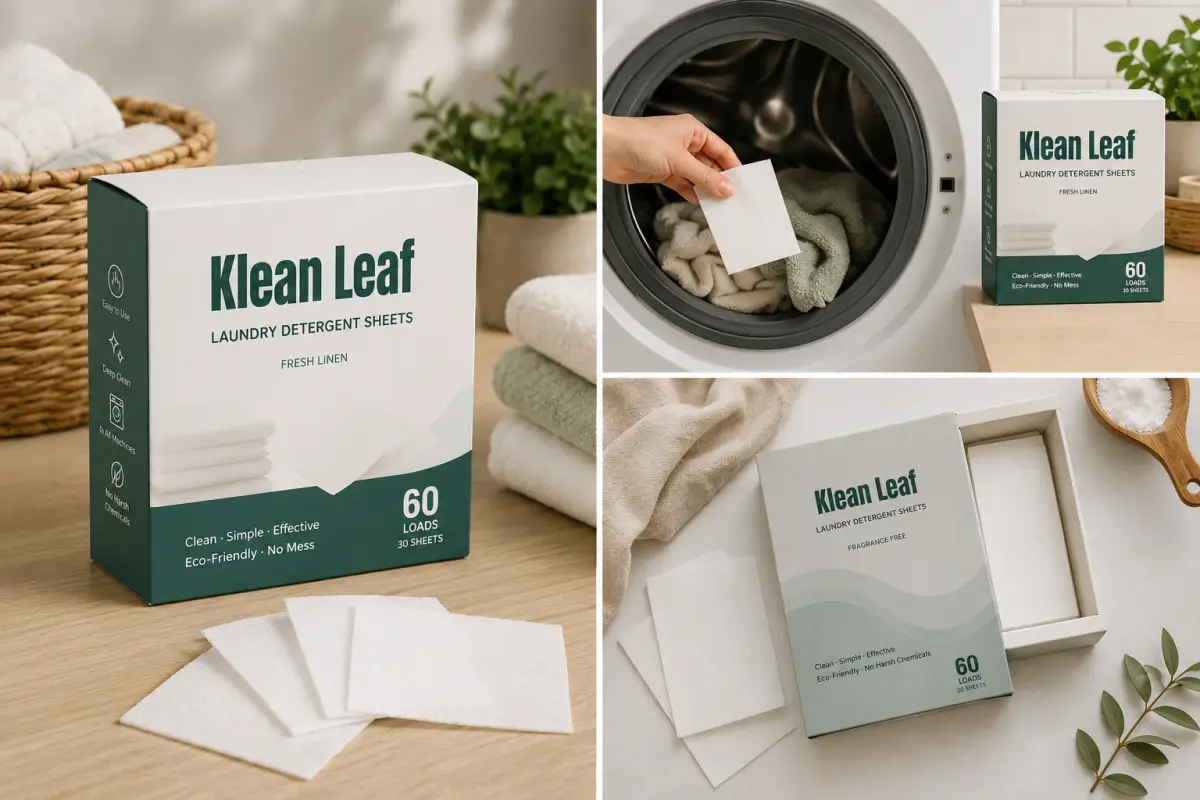
The customer removes a sheet, places it in the washing machine, and starts the cycle. There is no heavy bottle to lift, no cap to measure, and less chance of liquid spilling around the laundry area.
For normal household use, the directions can be simple:
- Use a half sheet for a small or lightly soiled load.
- Use one full sheet for a regular load.
- Adjust the dosage for larger or heavily soiled loads.
The exact instructions depend on the formula, sheet size, perforation, and cleaning strength.
Brands should test the product before finalizing these directions. A dosage that works for a lightly worn load may not be enough for towels, children's clothing, workout clothing, or heavily soiled laundry.
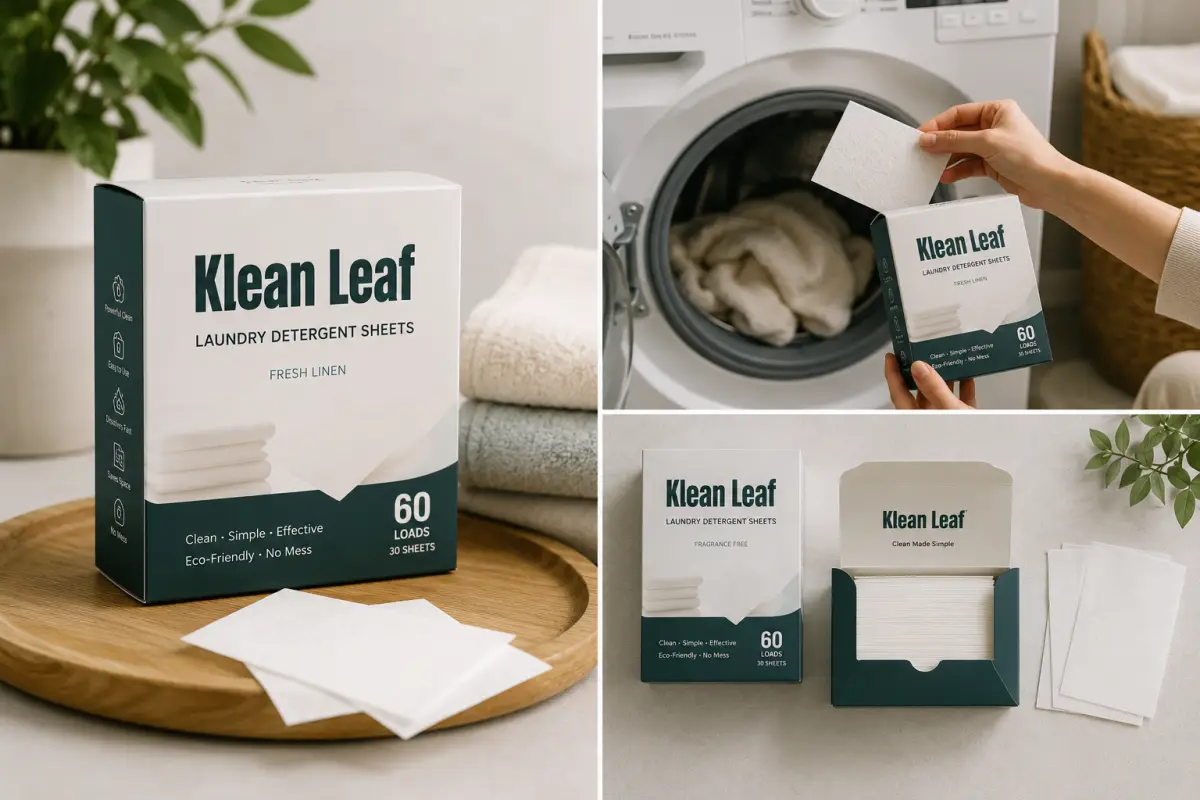
Compact Packaging Creates More Options
Traditional liquid detergent usually requires a bottle, cap, label, and leak-resistant shipping preparation.
Laundry detergent sheets can be packed in a much smaller format.
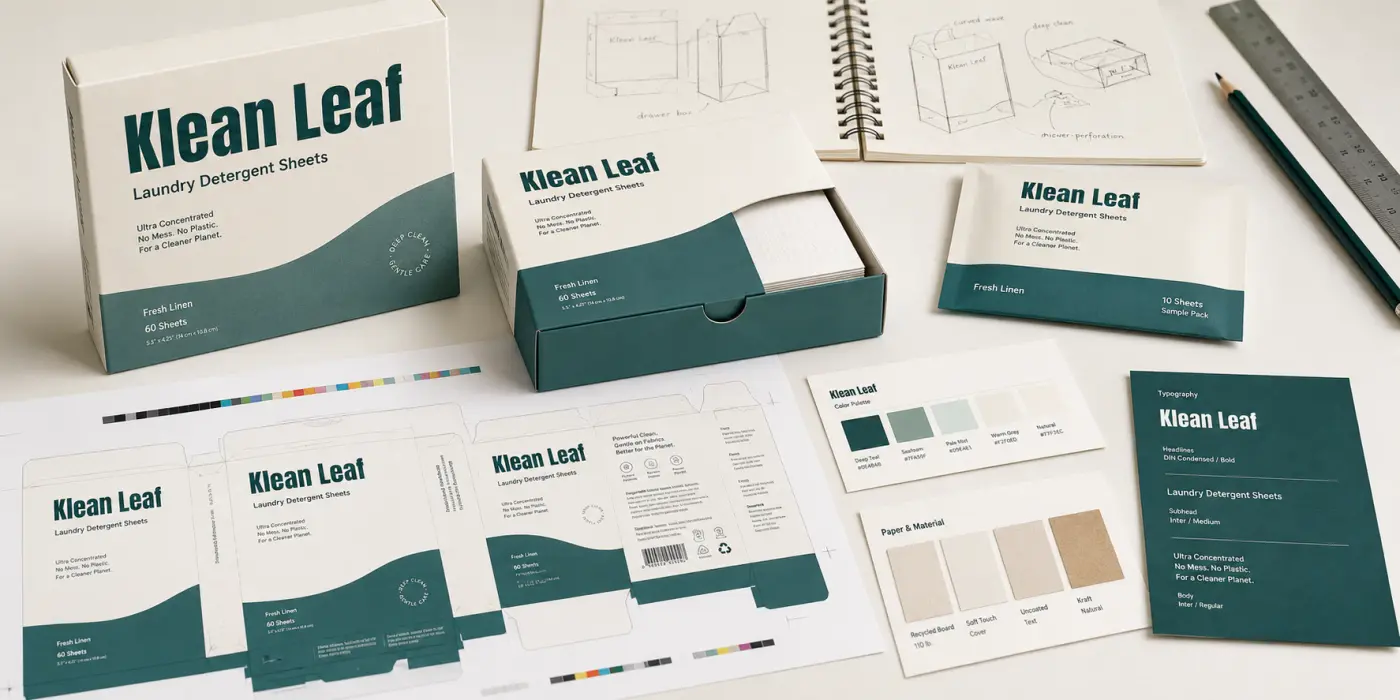
Common packaging options include:
- Paper envelopes
- Folding paper boxes
- Drawer-style paper boxes
- Sample-size paper packs
- Bulk refill cartons
- Loose-sheet cartons for local packing
Each option serves a different purpose.
A small envelope may work well for laundromats, hotels, vacation rentals, trial programs, or donations. For a laundromat program using vending machines, review the laundry detergent sheet vending pack and confirm machine compatibility. A larger paper box may be more suitable for grocery stores, online retail, subscriptions, or everyday household use.
The best package is not always the most elaborate one. It should fit the number of sheets, protect the product, display the required information, and work for the intended sales channel.
Storage and Shipping Are Easier to Plan
Laundry detergent sheets are lighter and more compact than bottled liquid detergent.
For brands, wholesalers, and distributors, this can make inventory easier to handle. More units may fit into a shipping carton, and the cartons generally require less warehouse space than comparable bottled products.
This can be especially useful for:
- E-commerce brands
- Retailers with limited shelf space
- Refill shops
- Subscription programs
- Hotels and short-term rentals
- Distributors shipping to multiple locations
- Companies importing finished products
However, compact does not mean damage-proof.
Paper packages still need enough structure to survive handling and transportation. Thin envelopes can bend. Box corners can become compressed. Humidity can affect the sheets if the packaging is not properly sealed or stored.
Packaging and carton planning should therefore be reviewed before mass production, not after the finished goods are ready to ship.
Formula Performance Still Comes First
A laundry detergent sheet can have beautiful packaging and a strong brand story, but customers will not reorder it if it does not clean their laundry.
This is one of the most important lessons in the category.
Some earlier laundry sheet formulas focused heavily on being compact and convenient but did not provide enough cleaning support for more difficult loads.
Newer formulas can include better surfactant systems, enzyme support, improved dissolving performance, and more balanced sheet flexibility. Even so, performance can vary considerably between suppliers and formulas.
Before selecting a product, buyers should test:
- Everyday cleaning performance
- Dissolving behavior
- Cold-water performance
- Sheet strength
- Perforation quality
- Fragrance strength
- Fragrance stability
- Residue after washing
- Performance on towels and heavier loads
- Product condition after storage
A formula should not be selected from price and specifications alone.
Physical sample testing gives the buyer a much clearer understanding of what customers will actually receive.
If enzyme support is part of your brief, review 3-in-1 Enzyme Laundry Detergent Sheets as a product direction for sample evaluation.
Different Customers Want Different Products
There is no single detergent sheet that is right for every brand.
Some customers want a noticeable fragrance that stays on clothing after the wash. Others prefer a light scent. Some specifically look for fragrance-free products.
The same applies to cleaning strength, package size, ingredient positioning, and price.
A brand selling through a natural-product store may choose a different formula and package from a company supplying laundromats. A hotel amenity program may need small packs, while an online household brand may want a larger drawer box.
Before requesting samples, it helps to answer a few basic questions:
- Who is the customer?
- Where will the product be sold?
- How many loads should the package provide?
- Does the customer prefer scented or fragrance-free products?
- Is the product positioned around value, performance, convenience, or sensitive use?
- What retail price is realistic?
- Will the product be sold individually, in bundles, or through subscriptions?
These decisions help the manufacturer recommend a more appropriate formula and packaging structure.
Paper Packaging Needs Careful Development
Brands are often attracted to laundry sheets because they can use paper-based retail packaging.
That is a reasonable goal, but paper packaging still requires proper development.
The package needs to be large enough for the selected sheet count but not so large that the product moves around excessively. It also needs enough space for branding, directions, ingredients, safety information, barcode, net weight, company details, and country of origin.
Once the package type and sheet count are confirmed, the manufacturer can provide the correct dieline.
The designer then creates the artwork using that dieline. After the file has been reviewed, a physical packaging sample can be printed and shipped to the brand for approval.
This step is important because a package can look very different in person than it does on a computer screen.
The physical sample allows the buyer to review:
- Finished size
- Paper material
- Color accuracy
- Text readability
- Opening and closing
- Sheet fit
- Fold quality
- Barcode placement
- Overall shelf appearance
A package should not move into mass production until both the artwork and the physical structure have been carefully reviewed.
Refill and Bulk Programs Are Another Option
Some businesses do not need individually packed retail units.
Refill shops, distributors, institutional programs, and brands with local packing operations may prefer loose sheets packed in bulk cartons.
This can reduce the amount of individual retail packaging and allow the buyer to pack the sheets closer to the final market.
Bulk supply also introduces additional responsibilities.
The buyer needs to decide:
- How the sheets will be stored
- How they will be counted
- How fragrances will be separated
- Who will complete the final packaging
- What local labeling requirements apply
- How lot numbers will be maintained
- How the sheets will be protected from moisture
Bulk programs work best when the final packing and storage process is already clearly planned.
Laundry Sheets Are Not the Right Fit for Every Project
Laundry detergent sheets have clear advantages, but brands should also understand their limits.
The product format may not be ideal for customers who strongly prefer liquid detergent, want to measure highly specific doses, or regularly wash heavily soiled commercial loads.
Laundry sheets also need good moisture protection. Poor storage or packaging can affect sheet condition. Very heavy stains may still require pre-treatment, just as they often do with liquid or powder detergent.
The product should be presented honestly.
A good laundry sheet can be practical for daily household laundry, but it should not be marketed as a solution that eliminates every laundry problem.
Clear usage instructions and realistic performance claims are better for the customer and better for the brand.
What Brands Should Ask a Supplier
The lowest unit price should not be the only factor when selecting a laundry detergent sheet manufacturer.
Brands should also ask about:
- Available formulas
- Enzyme options
- Fragrance choices
- Fragrance-free options
- Sheet dimensions
- Perforation
- Sheet count
- Packaging options
- Minimum order quantity
- Sample availability
- Packaging samples
- Production lead time
- Quality-control process
- Available documentation
- Carton packing
- Shipping and logistics support
A reliable supplier should be willing to discuss the complete project, not only provide a price for the sheets.
The product, packaging, artwork, cartons, production schedule, and shipping plan all affect the final result.
How Klean Leaf Supports Private-Label Projects
Klean Leaf works with brands, wholesalers, retailers, refill shops, distributors, and e-commerce companies developing laundry detergent sheet products.
Our support can include:
- Formula discussion
- Scent and fragrance-free options
- Sample preparation
- Sheet-count planning
- Package selection
- Dieline preparation
- Artwork review
- Physical packaging samples
- Production coordination
- Carton planning
- Quality review
- Export and logistics coordination
Some clients come to us with completed branding and packaging artwork. Others are still deciding what type of product they want to build.
Both situations are normal.
The first step is usually to understand the intended customer, sales channel, package size, formula direction, and order quantity. From there, we can organize the sample and development process.
Is the Format Right for Your Brand?
Laundry detergent sheets are gaining attention for practical reasons.
They are compact, simple to use, easier to store than bulky detergent bottles, and compatible with several paper-packaging formats.
For the right customer and sales channel, they can be a strong product direction.
But success still depends on the details: formula performance, honest product positioning, appropriate packaging, clear instructions, and consistent manufacturing.
Brands should take time to test the sheets, review physical packaging samples, and confirm the entire project before beginning mass production.
That process may take longer than choosing a ready-made product from a catalog, but it usually leads to a more dependable result.
Planning a Laundry Detergent Sheet Project?
Klean Leaf supports private-label laundry detergent sheet development from initial product discussion through sampling, packaging, production, and shipping.
Contact our team to discuss your product idea, request samples, or review available packaging options.
Email:
hello@kleanleaf.us
Website:
https://www.kleanleaf.us/
Frequently Asked Questions
Why are brands interested in laundry detergent sheets?
Brands are interested in the format because it is compact, lightweight, simple to portion, and compatible with smaller paper-packaging formats. The product may also be easier to store and ship than bottled liquid detergent.
Do laundry detergent sheets work for every type of laundry?
A well-developed sheet can work well for normal household laundry. Very large or heavily soiled loads may require a higher dosage or pre-treatment, depending on the formula and washing conditions.
Can laundry sheets be packed in paper packaging?
Yes. Common options include paper envelopes, folding cartons, drawer boxes, sample packs, and bulk refill cartons. The appropriate package depends on the sheet count, retail channel, and required product information.
Should brands test samples before ordering?
Yes. Buyers should test cleaning performance, dissolving behavior, sheet strength, fragrance, perforation, and product condition before confirming production.
Can Klean Leaf support private-label packaging?
Yes. Klean Leaf can help review package options, confirm dimensions, provide dielines, review artwork, produce physical packaging samples, and coordinate final production packing.
Match Laundry Sheets to Your Sales Channel
Compare formula and packaging directions before requesting representative samples.