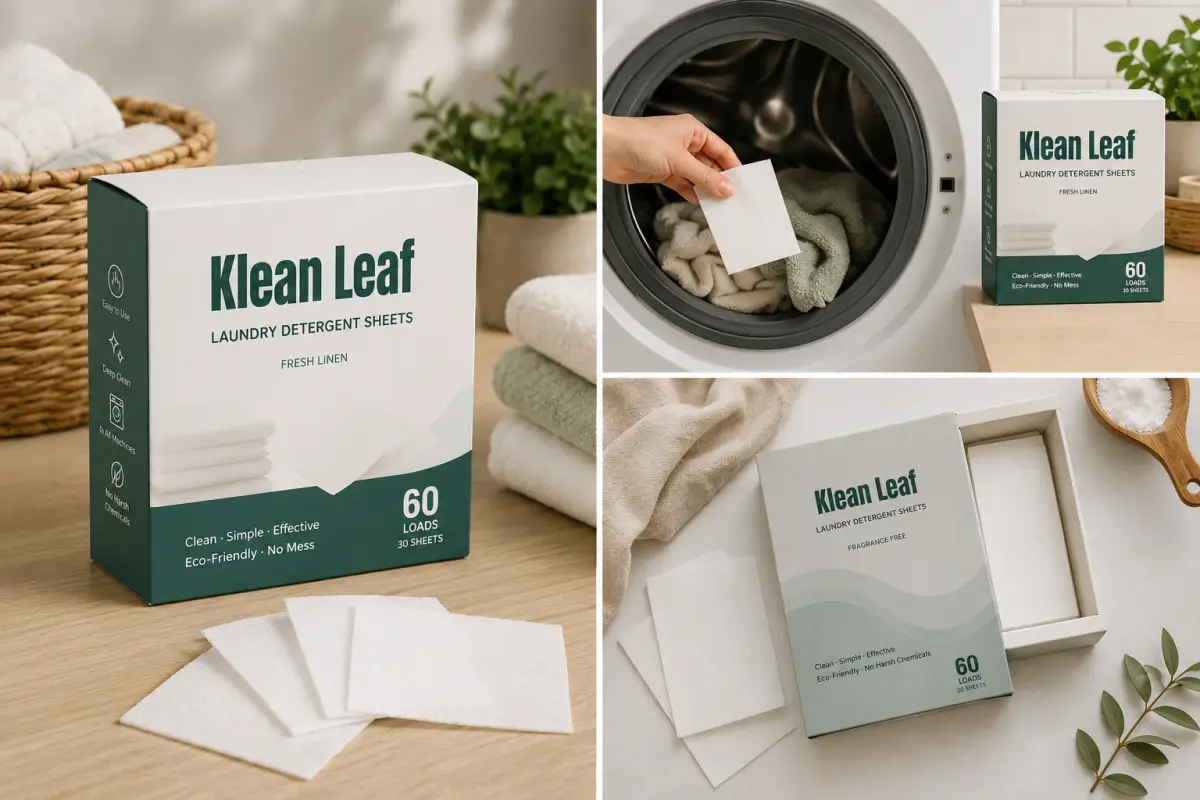
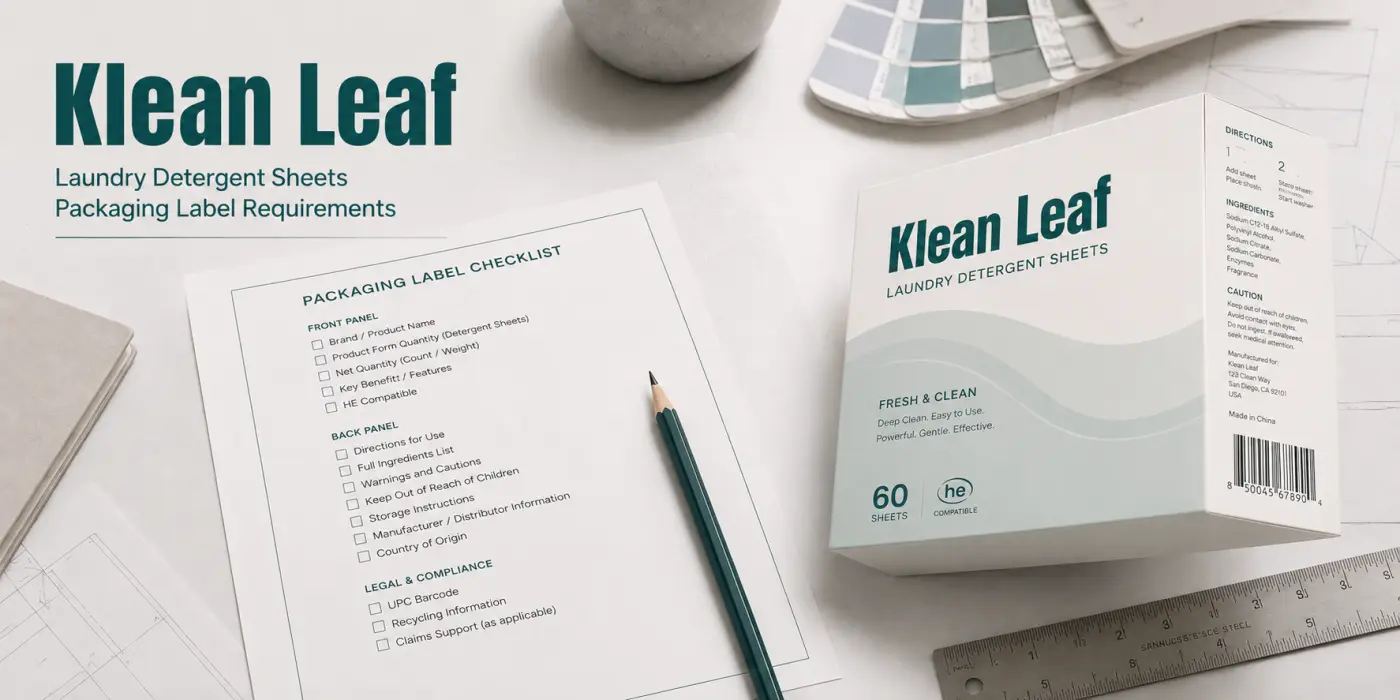
Packaging is one of the most important parts of developing a private-label laundry detergent sheets product. It protects the product, communicates your brand identity, provides important product information, and helps customers understand what makes your product different.
For new brands, packaging development can initially feel complicated. You may be deciding between several package formats, different sheet counts, and multiple design directions at the same time.
Klean Leaf helps guide clients through the packaging process step by step. From choosing the packaging structure to reviewing a physical printed sample, our goal is to make the process clear, organized, and manageable.
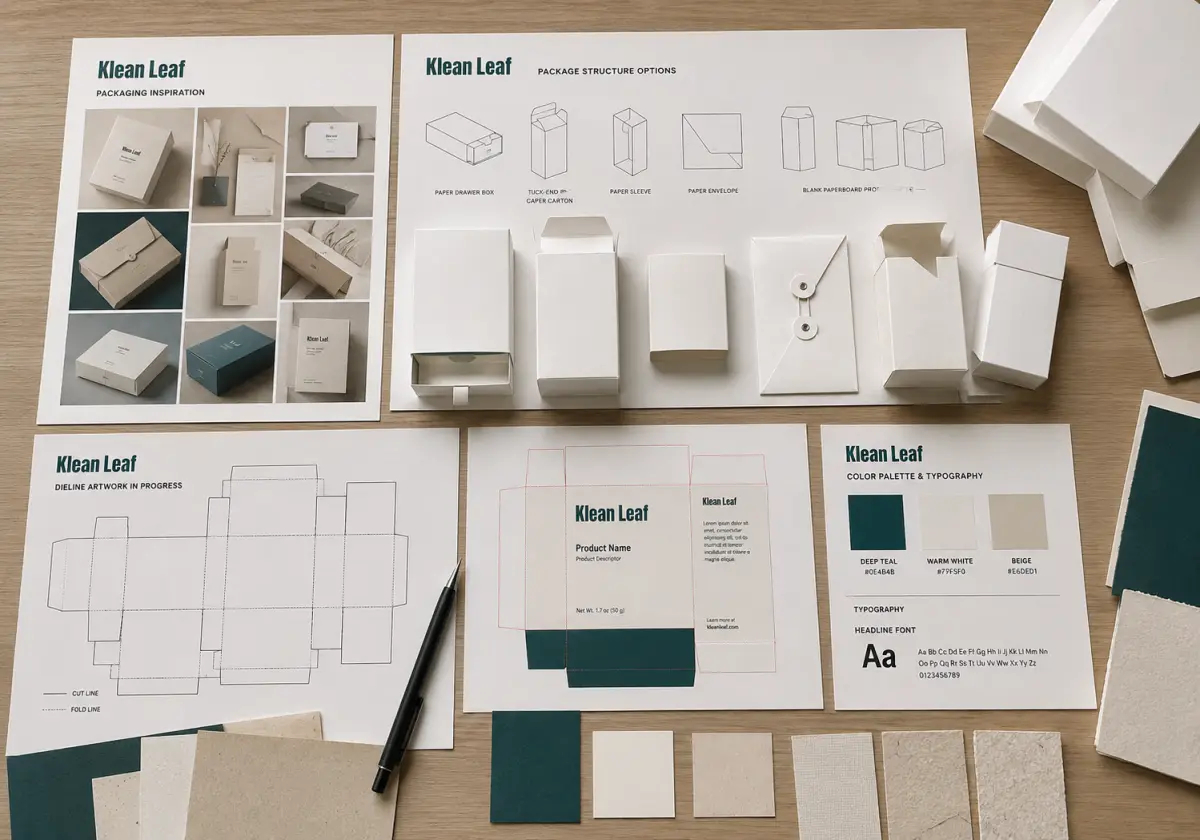
Step 1: Decide What Type of Package You Want
The first step is choosing the general packaging format for your product.
Before making a decision, consider where and how your laundry detergent sheets will be sold. Packaging designed for a retail shelf may have different priorities from packaging intended primarily for e-commerce, subscription orders, hotels, laundromats, or sample distribution.
You can begin by researching packaging styles online and reviewing products from other brands in your target market. This can help you understand common packaging formats, opening styles, product counts, and ways that important information is arranged.
You may also review the Klean Leaf Product Profile to explore packaging examples and available product options.
When reviewing packaging ideas, consider:
- How the package will be displayed
- How easily customers can open and close it
- Whether the package needs to be resealable
- How much room is available for branding and product information
- How well the package protects the sheets
- Whether the structure is suitable for shipping
- The overall appearance you want for your brand
You do not need to have every detail finalized at the beginning. Reference images, competitor examples, rough sketches, or links to packaging you like can help our team understand your preferred direction.
If your laundromat channel uses vending machines, the Laundry Detergent Sheets Vending Machine Pack is a specific packaging direction to review with our team. Confirm pack dimensions and machine compatibility for your project.
Step 2: Confirm the Number of Sheets in Each Package
After selecting the general package type, the next step is deciding how many laundry detergent sheets will be included in each retail unit.
For example, you may want to offer:
- A compact package for trial, travel, laundromats, or short stays
- A standard retail package for everyday household use
- A larger package for families, subscriptions, or value-focused customers
- Multiple package sizes within the same product line
The sheet count affects the required internal space, package dimensions, net weight, product claims, and overall structure.
It is also important to decide how the load count will be communicated. If the sheets are perforated and each full sheet can be divided into two loads, the number of full sheets and the number of loads should both be presented clearly.
Once the package type and sheet count are confirmed, our team can determine the appropriate packaging dimensions.
Step 3: Klean Leaf Provides the Correct Dieline
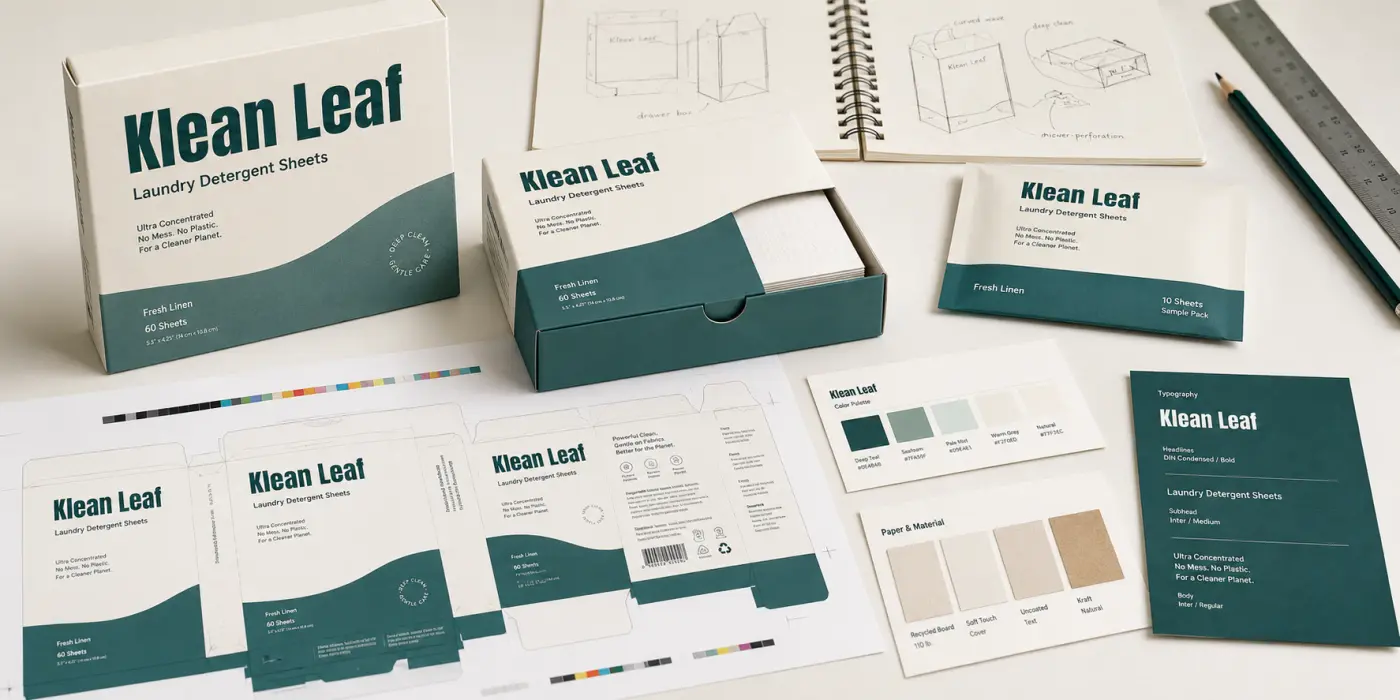
A dieline is the flat technical template used to create packaging artwork. It shows the panels, folds, cut lines, glue areas, bleed areas, and other structural details that the designer must follow.
After the packaging format and sheet count are confirmed, Klean Leaf will provide the appropriate dieline for your selected package.
The dieline allows your designer to see where each part of the artwork belongs, including:
- Front panel
- Back panel
- Side panels
- Top and bottom panels
- Fold lines
- Cut lines
- Glue areas
- Bleed and safe areas
- Barcode placement
- Lot or date coding area
Your designer should use the original dieline file without changing its dimensions or structure. Altering the dieline without approval can affect how the final package is cut, folded, glued, or assembled.
Step 4: Prepare the Packaging Artwork
Once the dieline is available, your designer can begin creating the packaging artwork.
This is where your visual brand identity is applied to the technical package structure. The artwork may include your logo, brand colors, typography, product name, fragrance, product benefits, directions, safety information, barcode, company details, and country of origin.
Before the artwork begins, it is helpful to prepare:
- Your logo in a high-resolution or vector format
- Brand colors
- Preferred fonts
- Product name
- Fragrance or product variation
- Sheet and load count
- Company name and address
- Website and customer service information
- UPC barcode
- Product claims you want to use
- Examples of designs you like
The exact ingredient list will be provided by Klean Leaf based on your confirmed formula. Please do not finalize or print the ingredient section until you have received the formula-specific ingredient information from our team.
The designer should keep important text and design elements inside the dieline's safe area. Background graphics should extend through the bleed area so that no unintended white edges appear after cutting.
Step 5: Submit the Packaging File for Review
Once the initial design is ready, send the packaging artwork to the Klean Leaf team for review.
Whenever possible, please provide the original editable artwork file together with a PDF preview. Keeping the original design file available makes future corrections and production adjustments much easier.
Our team and packaging partners will review the artwork for practical production issues such as:
- Correct dieline dimensions
- Artwork orientation
- Bleed and safe areas
- Fold and glue locations
- Text placement
- Barcode placement
- Product count and net weight
- Country-of-origin information
- Space for lot or date coding
- Image quality
- General print readiness
We may send comments or request revisions before preparing the physical sample. This review helps identify obvious issues before time and materials are used for sample printing.
The brand owner should also carefully review all names, claims, addresses, contact information, barcode numbers, spelling, and legal content before final approval.
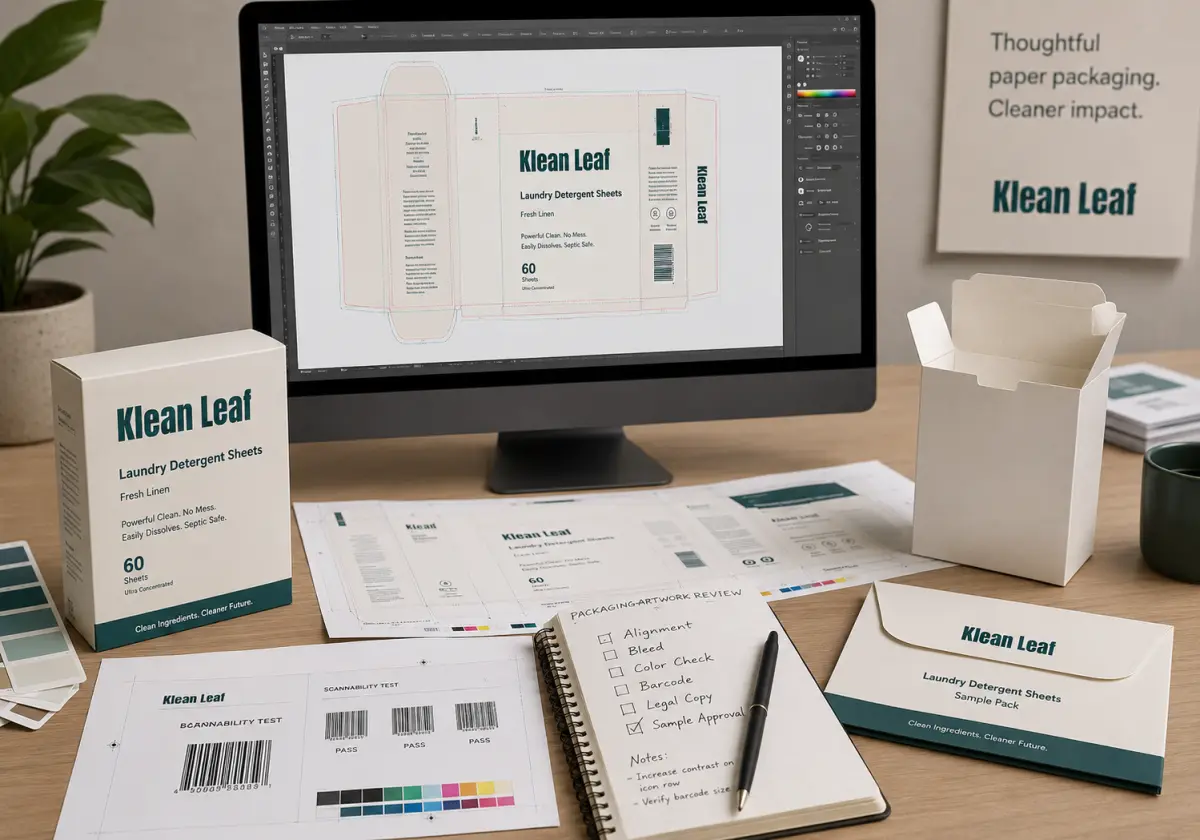
Step 6: Produce a Physical Packaging Sample
After the artwork file has passed the initial review, our packaging team will print a physical sample.
A physical sample is valuable because colors, text size, folds, material texture, and package proportions can look different in person than they do on a computer screen.
The sample allows you to review:
- Overall package size
- Printed colors
- Logo and text clarity
- Material appearance
- Opening and closing experience
- Fold and glue quality
- Barcode visibility
- Placement of important information
- How the laundry sheets fit inside
- Overall shelf and product presentation
Depending on the packaging format and sample method, the sample may be produced using a digital printing process. Some differences between a digital sample and the final mass-produced packaging may occur, but the sample provides a strong representation of the structure and overall design.
Step 7: We Air-Ship the Sample to You
Once the physical packaging sample is ready, Klean Leaf will arrange air shipment to you for review.
When the sample arrives, inspect it carefully under normal lighting and handle it as a customer would. Open it, close it, place the product inside, read the smaller text, and evaluate how it looks from different angles.
Please review all details, including:
- Front, back, and side panels
- Colors and print quality
- Package dimensions
- Product fit
- Sheet and load count
- Barcode
- Company information
- Country of origin
- Ingredient section
- Caution statement
- Lot-coding area
- Spelling and punctuation
We encourage you to gather all feedback from your team before sending revisions. Consolidated feedback helps reduce unnecessary revision rounds and keeps the project moving efficiently.
Step 8: Approve the Packaging for Production
If the physical sample is approved, the packaging file can move toward mass production.
If changes are required, your designer can revise the original artwork file and submit the updated version for another review. Depending on the extent of the changes, an additional physical sample may be recommended before final production.
Mass printing should begin only after the artwork, content, dimensions, and sample have been formally approved.
Once the packaging is approved, our team will coordinate packaging production with the manufacturing schedule for your laundry detergent sheets.
What If You Do Not Have a Packaging Designer?
Not every client begins the project with an in-house designer or established design team.
If you do not have a designer, Klean Leaf can introduce you to one of our trusted partner designers. Our partner designers have experience working with retail packaging and preparing production-ready artwork using technical dielines.
They can help with areas such as:
- Developing an initial design direction
- Organizing information on the package
- Applying your existing brand identity
- Creating artwork from reference images
- Preparing multiple product variations
- Making revisions based on your feedback
- Setting up production-ready packaging files
Design services are handled separately from manufacturing, and the design scope, fee, schedule, and number of revisions should be confirmed directly before work begins.
You remain in control of the final creative direction. Our role is to help connect the designer, client, packaging team, and manufacturing team so that everyone works from the same approved information.
Tips for a Smoother Packaging Process
Collect Reference Images Early
Save examples of packages, colors, typography, layouts, and visual styles you like. Even examples from industries outside laundry care can help explain your desired look.
Confirm Product Details Before Designing
Changing the package type or sheet count after artwork begins can require a new dieline and significant redesign work.
Register Your UPC Before Final Approval
If your product will use a retail barcode, register the correct UPC early enough for it to be included in the final artwork.
Each unique retail product variation may require its own barcode. Different scents, package sizes, or sheet counts should be reviewed as separate products when planning your UPC requirements.
Keep the Original Design Files
Do not rely only on screenshots, JPG files, or flattened PDFs. Keep the editable source file and all linked fonts and images available for future revisions.
Review Printed Text Carefully
Packaging teams can check placement and print readiness, but the brand owner should verify the accuracy of product names, claims, addresses, UPC numbers, spelling, and legal information.
Plan for Multiple Product Variations
If you intend to offer several fragrances or sizes, tell the designer at the beginning. A flexible design system can make it easier to create consistent variations later.
A Typical Klean Leaf Packaging Workflow
The overall process normally follows this sequence:
- Choose the preferred packaging format.
- Confirm the number of sheets and loads per package.
- Review product and package requirements with Klean Leaf.
- Receive the appropriate dieline.
- Prepare the artwork using the dieline.
- Submit the packaging file for technical review.
- Complete any required artwork revisions.
- Print a physical packaging sample.
- Air-ship the sample for client review.
- Approve or revise the sample.
- Finalize the packaging file.
- Begin packaging and product production.
The exact process may vary depending on the package structure, customization requirements, and number of product variations.
Begin Your Packaging Development with Klean Leaf
A successful package begins with clear product decisions, accurate technical files, and careful review before mass production.
Packaging capability is also one of the key filters in our 2026 guide to comparing laundry detergent sheet manufacturers.
Whether you already have completed branding or are beginning with only a product idea, Klean Leaf can help organize the next steps. We can assist with packaging selection, sheet-count planning, dielines, artwork review, physical samples, and production coordination.
If you need design support, we would also be happy to introduce you to one of our partner designers.
Contact the Klean Leaf team to discuss your private-label laundry detergent sheets project.
Email:
hello@kleanleaf.us
Website:
https://www.kleanleaf.us/
Frequently Asked Questions
Where are Klean Leaf laundry detergent sheets manufactured?
Klean Leaf client support is based in Columbus, Ohio, and current laundry detergent sheet manufacturing is handled in China by an experienced factory team.
Why is country-of-origin transparency important for laundry sheets?
Private label buyers need accurate origin information for packaging, retail review, customs, and customer trust before launching a detergent sheet product.
What parts of laundry sheet production require quality control?
Formula mixing, drying, cutting, perforation, scent separation, package appearance, carton labels, and final packing all need quality review.
Can Klean Leaf support custom private label packaging?
Yes. Klean Leaf can support package style selection, dielines, artwork review, package samples, production packing, and carton planning.
Review Laundry Sheet Packaging Directions
Compare the standard sheet product with a vending-pack project before choosing your package dimensions and artwork.