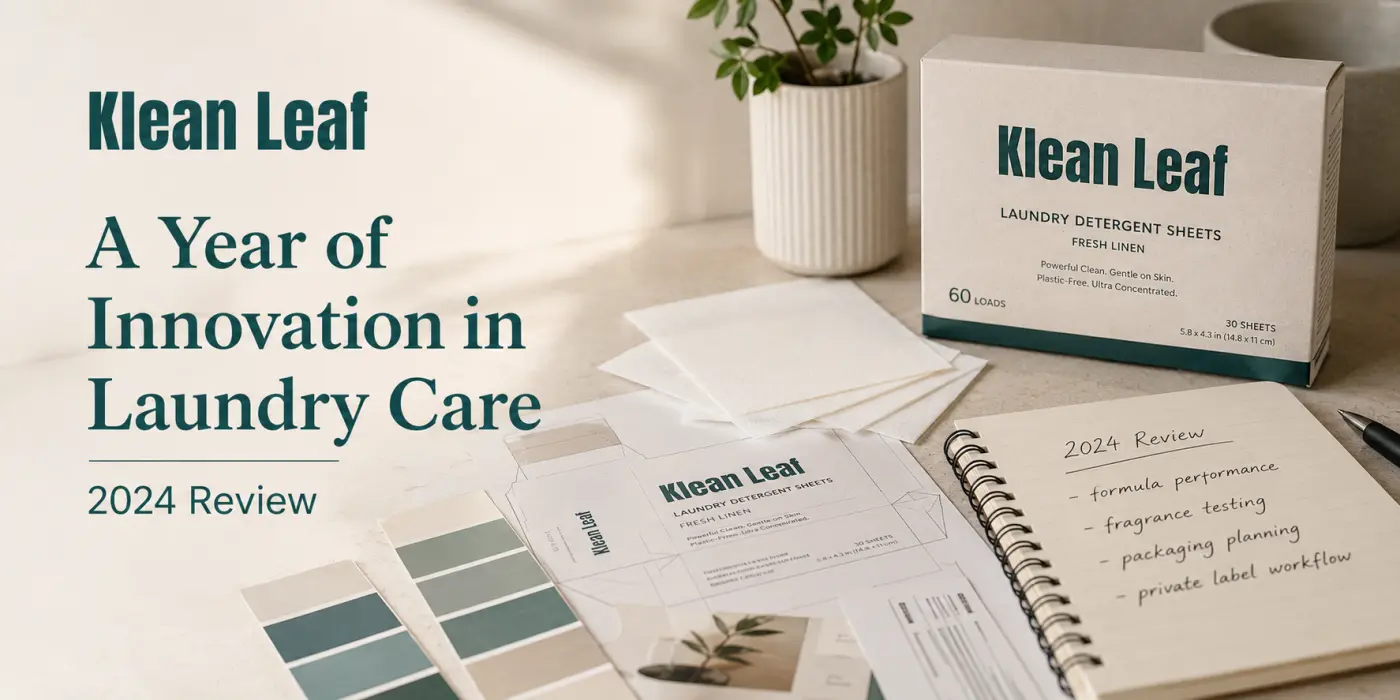
When people talk about innovation, they often make it sound like everything changed overnight.
That was not our experience in 2024.
Most of the meaningful changes we saw were smaller and more practical. Brands asked more detailed questions. Product formulas continued to improve. Packaging became part of the conversation earlier. Buyers thought more carefully about who would use the product and where it would be sold.
None of these changes looked dramatic by themselves. Together, however, they made laundry care products more thoughtful and better prepared for the real market.
Here are some of the changes we noticed while working with laundry detergent sheet brands and private-label buyers during 2024.
Buyers Started Asking Better Questions
A few years ago, many initial conversations about laundry detergent sheets focused almost entirely on the product format.
Buyers wanted to know whether the sheets dissolved, whether they could be packaged without a large plastic container, and how much space they could save compared with liquid detergent.
Those questions still matter, but they are no longer enough.
In 2024, more buyers asked about:
- Cleaning performance
- Sheet strength and flexibility
- Dissolving speed
- Fragrance strength
- Fragrance-free options
- Ingredient direction
- Packaging material
- Sheet and load count
- Storage stability
- Retail positioning
- Sample testing
- Production consistency
This made product-development discussions more useful.
Instead of beginning with "We want laundry sheets," more clients began with a clearer idea of the customer they wanted to serve.
Some were building products for families. Others were focused on sensitive-positioned formulas, refill shops, travel, short-term rentals, laundromats, subscriptions, or traditional retail.
Once the customer and sales channel were clearer, it became easier to make decisions about formula, package size, fragrance, and product count.
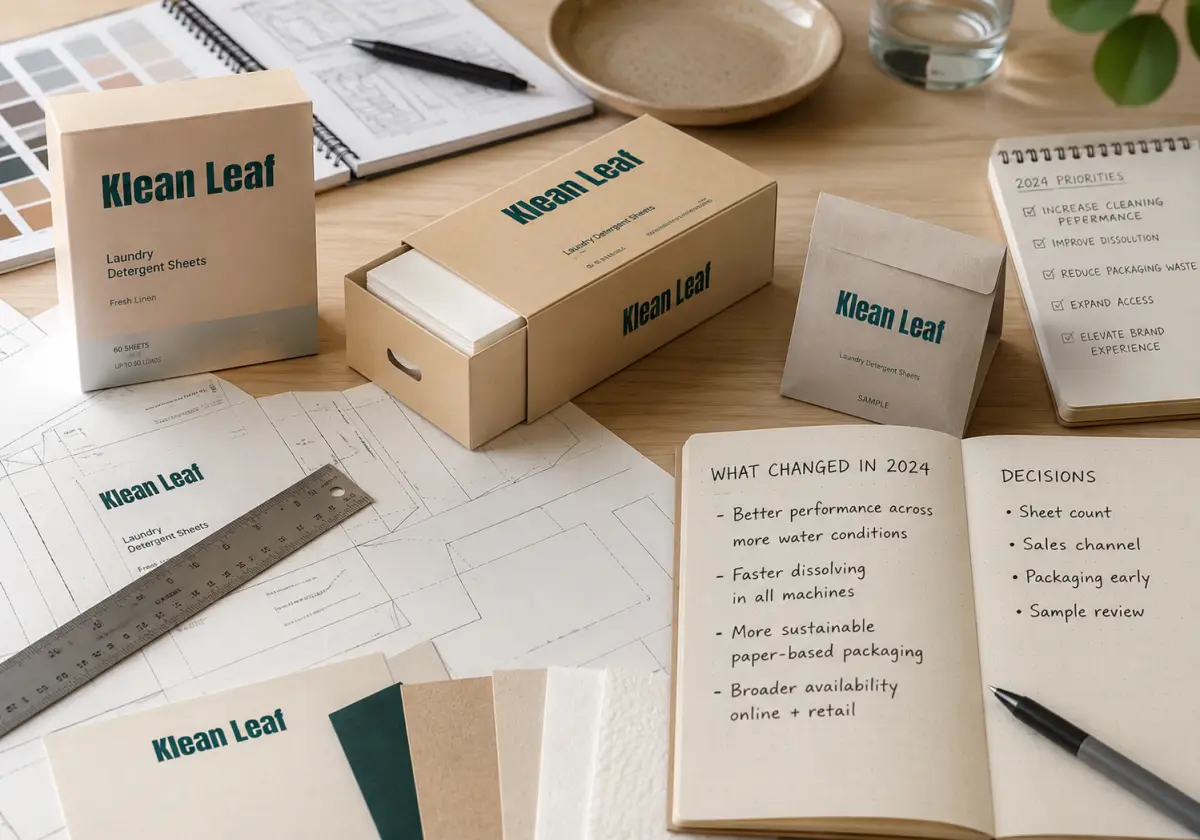
Cleaning Performance Received More Attention
Convenience may encourage someone to try laundry detergent sheets, but performance determines whether they use them again.
That became a larger part of the conversation in 2024.
Early laundry sheet products were sometimes designed around being light, compact, and easy to package. Some formulas worked well for normal loads but did not meet customer expectations for towels, workout clothing, food stains, body oils, or heavily soiled laundry.
The category has continued to improve.
Manufacturers have learned more about balancing:
- Cleaning ingredients
- Enzyme support
- Sheet flexibility
- Dissolving performance
- Fragrance
- Moisture control
- Drying conditions
- Storage stability
It is a careful balance. A sheet can clean well but feel too dry. It can dissolve quickly but break too easily during packing. It can hold a strong fragrance when first produced but lose part of that fragrance during storage.
Improving one part of the formula can affect another part.
This is why product sampling remains so important. A formula should not be selected only from a specification sheet. Buyers should handle the product, test it in laundry, compare fragrance options, and review how it performs under the conditions their customers are likely to use.
Packaging Became Part of Product Development
Packaging used to be treated as something that could be handled near the end of a project.
In 2024, more clients began discussing it much earlier.
That is a positive change because the package type affects many other decisions.
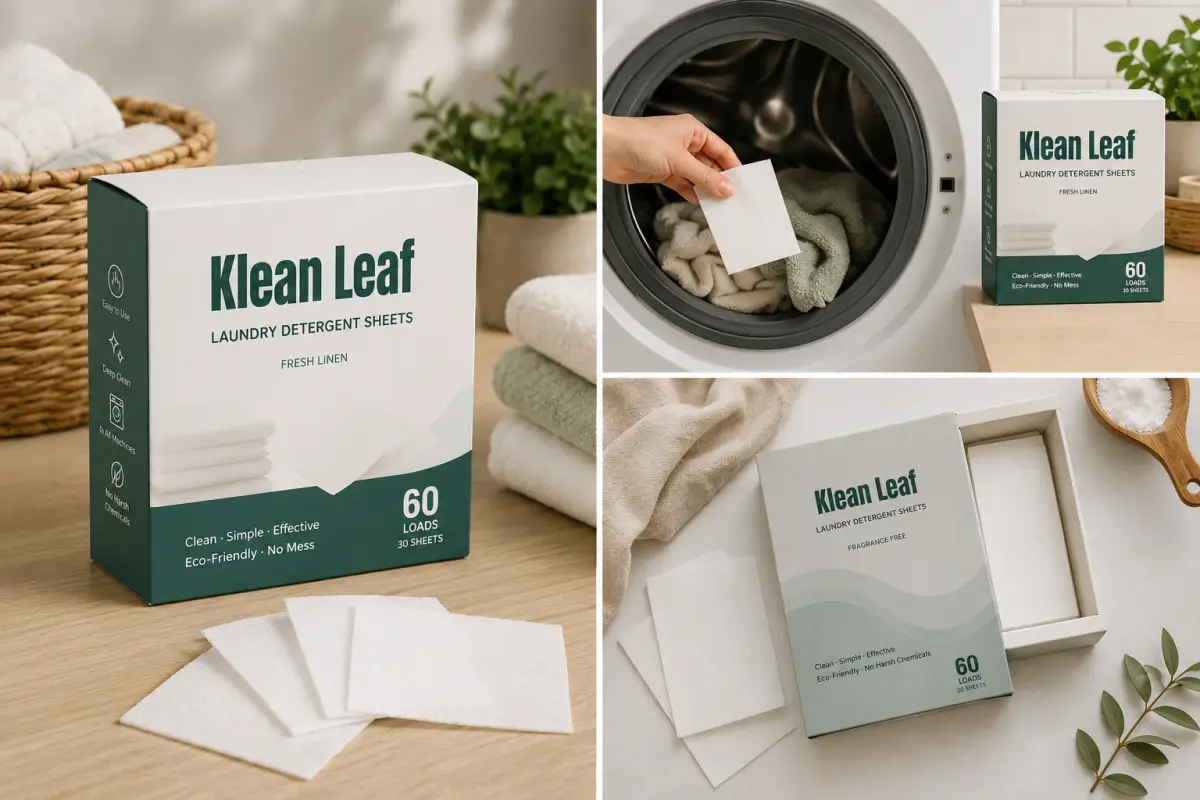
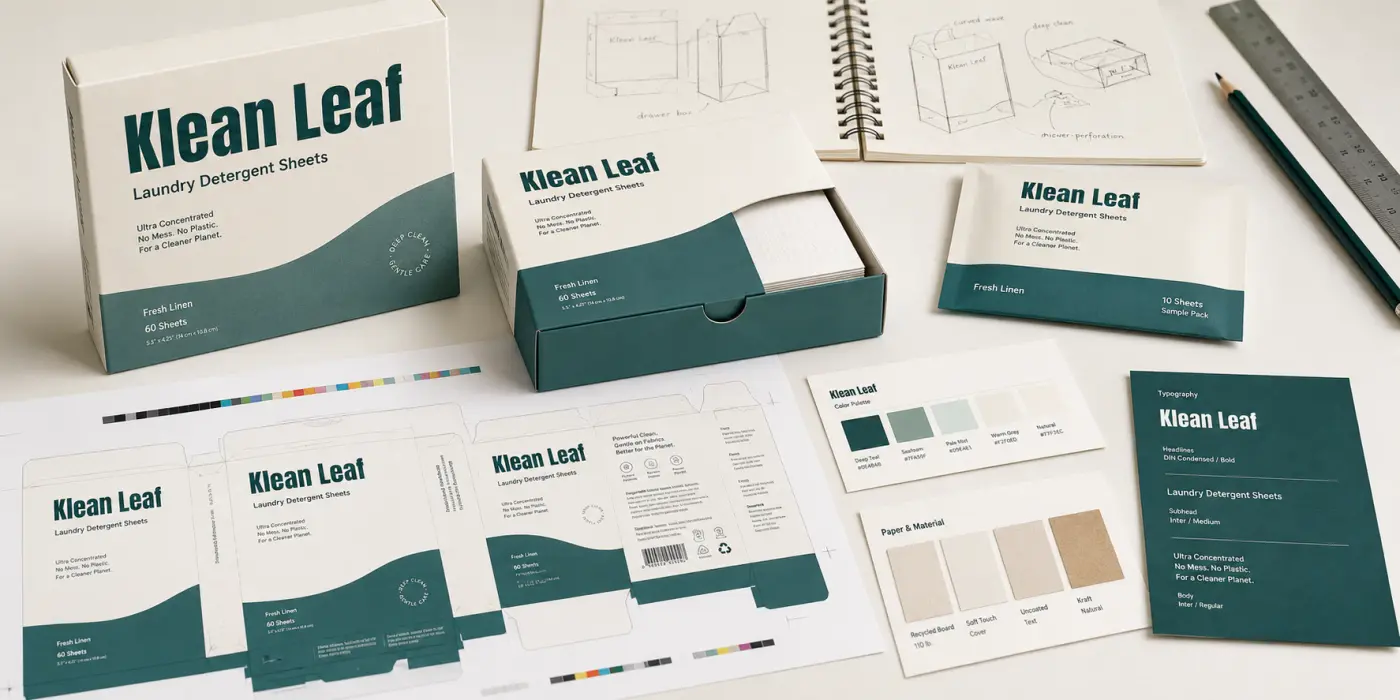
A compact paper envelope may work well for samples, travel, laundromats, or small retail packs. A paper box may offer more room for branding, directions, safety information, and retail presentation. A drawer-style box may create a different opening experience and work better for a larger sheet count.
Before artwork begins, the brand should understand:
- Which package structure it wants
- How many sheets will be inside
- How the sheets will be folded or stacked
- The finished package dimensions
- How the package will open
- How it will be displayed
- How it will be packed into shipping cartons
- How much space is required for labeling information
Once those details are confirmed, the correct dieline can be prepared for the designer.
Starting the packaging conversation earlier helps avoid a common problem: creating attractive artwork first and then discovering that it does not fit the actual package structure.
One Package Size Does Not Work for Every Customer
Another change we noticed was that more brands began planning products around specific sales channels instead of trying to make one package work everywhere.
A small package may make sense for:
- Laundromats
- Hotels
- Vacation rentals
- Donation programs
- Trial campaigns
- Travel retail
A larger package may be better suited for:
- Grocery stores
- Online retail
- Subscription programs
- Family use
- Natural-product stores
- Traditional household retail
The formula may be similar, but the pricing, package design, sheet count, and customer message can be very different.
This led to more conversations about building a product line rather than launching only one product.
A brand might begin with one fragrance and one package size, then later add a fragrance-free option, a larger household package, a sample pack, or a bulk format.
Thinking about this earlier can help the designer create a packaging system that remains consistent across future products.
Fragrance Choices Became More Thoughtful
Fragrance is highly personal.
Some clients want a noticeable scent that remains on clothing after the wash. Others want a lighter, cleaner scent. Some want completely fragrance-free products for customers who prefer a minimal formula direction.
In 2024, we noticed that more brands took time to test fragrance rather than choosing only from a name.
"Fresh Linen" can smell very different from one fragrance supplier to another. The same is true for lavender, ocean, citrus, floral, and other common fragrance descriptions.
The fragrance also needs to be tested in the sheet itself. A scent smelled directly from a bottle may change after it is added to the formula, dried, packaged, stored, and used in a wash.
For that reason, it is better to evaluate the finished sheet sample instead of approving a fragrance only from a fragrance strip or oil sample.
Private-Label Buyers Wanted More Than a Product
More clients also began looking for support beyond manufacturing.
They needed help understanding:
- Which formula direction fit their brand
- How to choose a package
- What information belonged on the label
- When to register a UPC
- How to use a packaging dieline
- How physical samples were produced
- What documents might be needed
- How long production and shipping could take
- How finished cartons would be packed
For an established laundry company, these questions may be familiar. For a new brand, they can be difficult to organize.
A private-label project works better when the product, packaging, manufacturing, and logistics teams are sharing the same information.
Many delays do not come from production itself. They come from unresolved artwork, incorrect package dimensions, missing barcode files, unconfirmed fragrances, or changes to the sheet count after the design has already started.
A clear workflow helps prevent those problems.
Bulk and Refill Formats Continued to Create New Options
Not every laundry detergent sheet needs to be sold in an individual retail box.
During 2024, we continued to see interest in loose sheets and larger bulk cartons for refill-oriented businesses, distributors, and companies that wanted to handle final packaging closer to their own market.
This approach can be useful for businesses that already have local packaging operations or want to reduce the amount of individual packaging used in their program.
However, bulk formats also require planning.
The buyer needs to consider:
- How the sheets will be protected during transportation
- How many sheets belong in each carton
- How fragrance variations will be separated
- How the product will be counted or weighed
- How the sheets will be stored after arrival
- Who will complete final retail packing
- Which labels and traceability information are required
Bulk supply can simplify one part of the project while creating new responsibilities for the buyer. It works best when those responsibilities are clear before production begins.
Most Improvements Happened Behind the Scenes
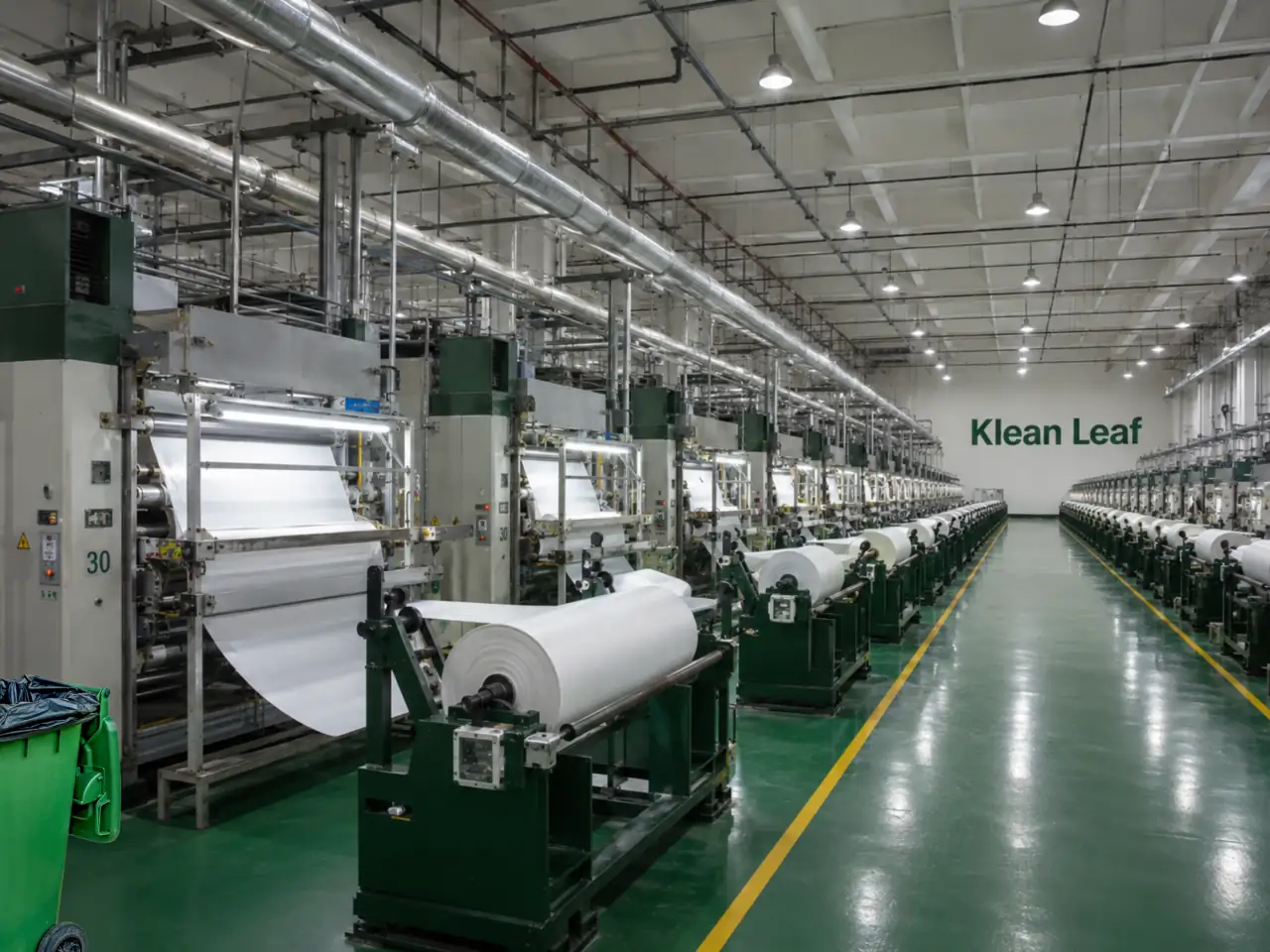
Customers usually see the finished sheet and package. They do not see the small adjustments made during product development and production.
Behind the finished product, teams may be reviewing:
- Formula mixing
- Drying temperature
- Sheet thickness
- Cutting accuracy
- Perforation
- Fragrance separation
- Sheet count
- Package dimensions
- Print quality
- Barcode placement
- Carton packing
- Lot coding
- Shipping preparation
These details are not exciting marketing topics, but they often determine whether the final product feels dependable.
For us, this was one of the most important lessons of 2024: improvement does not always need to be dramatic.
Sometimes it means a cleaner perforation line. Sometimes it means a package that closes more smoothly. Sometimes it means a fragrance that remains more stable or a formula that feels less brittle.
Those small changes matter when thousands of units are being produced.
What We Learned in 2024
The strongest projects were not always the projects with the largest budgets or the most complicated ideas.
They were usually the projects where the buyer had a clear customer, reviewed samples carefully, confirmed packaging details early, and gave organized feedback.
A good private-label laundry product does not begin with artwork alone.
It begins with practical decisions:
- Who is the customer?
- Where will the product be sold?
- What cleaning performance is expected?
- Which formula direction makes sense?
- How many sheets should be included?
- Which package fits the sales channel?
- What information must appear on the label?
- How will the finished order be stored and delivered?
Once those questions are answered, the rest of the process becomes much easier.
Looking Ahead
We do not expect one single product or formula to define the future of laundry care.
Different customers want different things.
Some prioritize stronger cleaning. Some care most about fragrance-free options. Others focus on compact packaging, refill formats, easy storage, or lower shipping weight.
The opportunity for brands is not simply to sell another detergent sheet. It is to build a product that makes sense for a particular customer and sales channel.
That is where we believe the next stage of laundry care development will come from: better formulas, clearer product positioning, more thoughtful packaging, and more honest communication about what the product can do.
At Klean Leaf, we will continue helping brands work through those decisions, from samples and formula direction to packaging, production, and delivery.
Planning a Private-Label Laundry Product?
Klean Leaf supports brands, retailers, wholesalers, distributors, and refill businesses developing laundry detergent sheets and related home-care products.
Our team can help with formula discussion, fragrance options, samples, package selection, dielines, artwork review, production coordination, and logistics planning.
Contact us to discuss your project:
Frequently Asked Questions
What changed in laundry care in 2024?
Klean Leaf saw buyers ask more practical questions about formula performance, sheet count, packaging structure, fragrance, sample testing, and how products would fit specific sales channels.
Why did packaging become more important earlier in the project?
Package format affects sheet count, dielines, labeling space, carton planning, and sample approval, so discussing packaging early helps avoid artwork and production delays.
Why is sample testing important for laundry detergent sheets?
Samples help buyers review sheet feel, dissolving behavior, fragrance, flexibility, and cleaning performance before choosing a formula for production.
What should private-label buyers clarify before production?
Buyers should clarify the target customer, sales channel, formula direction, sheet count, package type, label information, barcode needs, carton plan, and delivery requirements.
Planning to launch your own laundry sheets brand?
Klean Leaf helps brands develop private-label laundry detergent sheets with formula, fragrance, packaging, sampling, and production support.