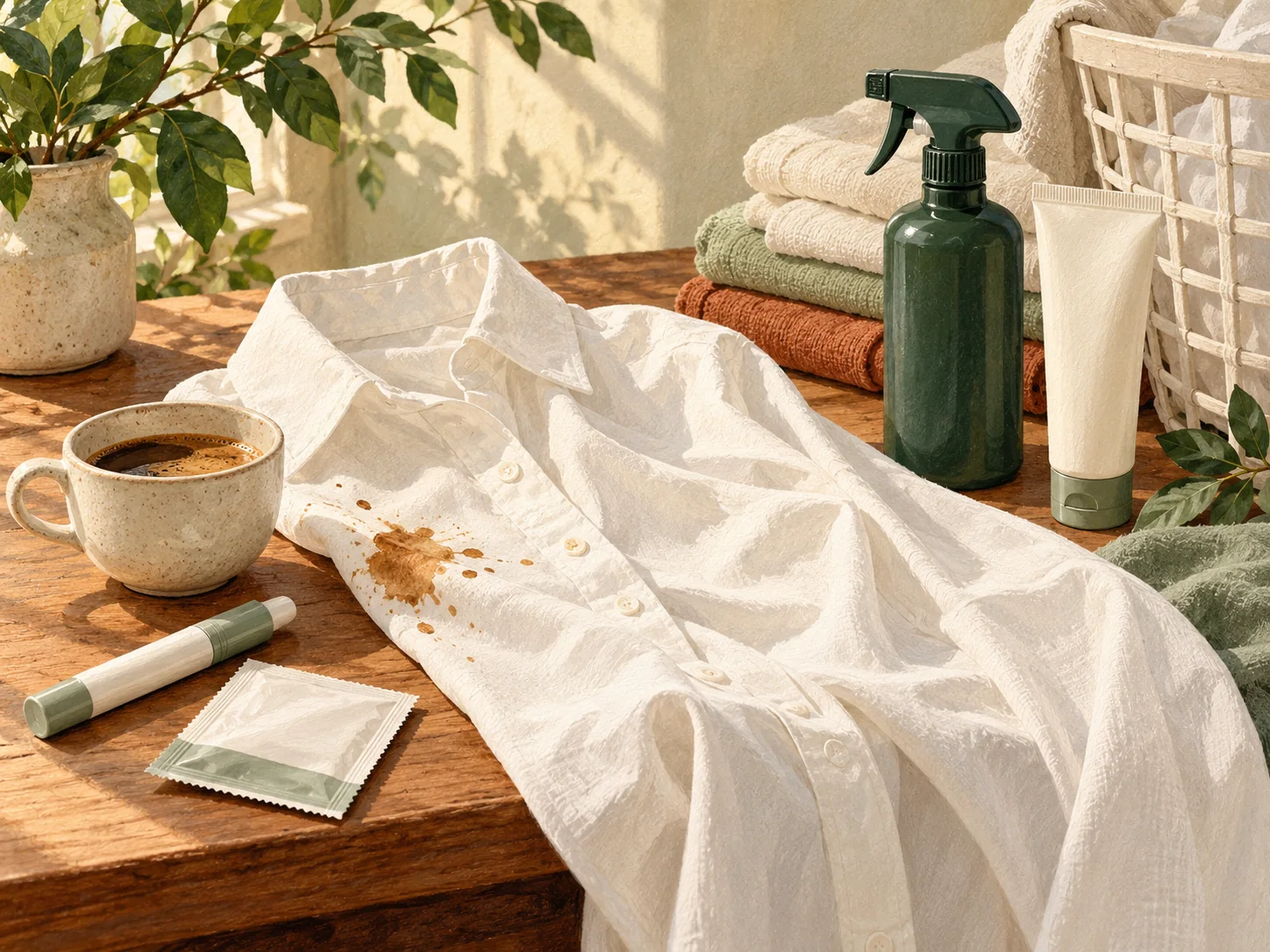
A request for peroxide wipes sounds specific. It names an ingredient, a format and a job: remove period stains from clothing. But the most important detail is still missing. When will the customer actually use them?
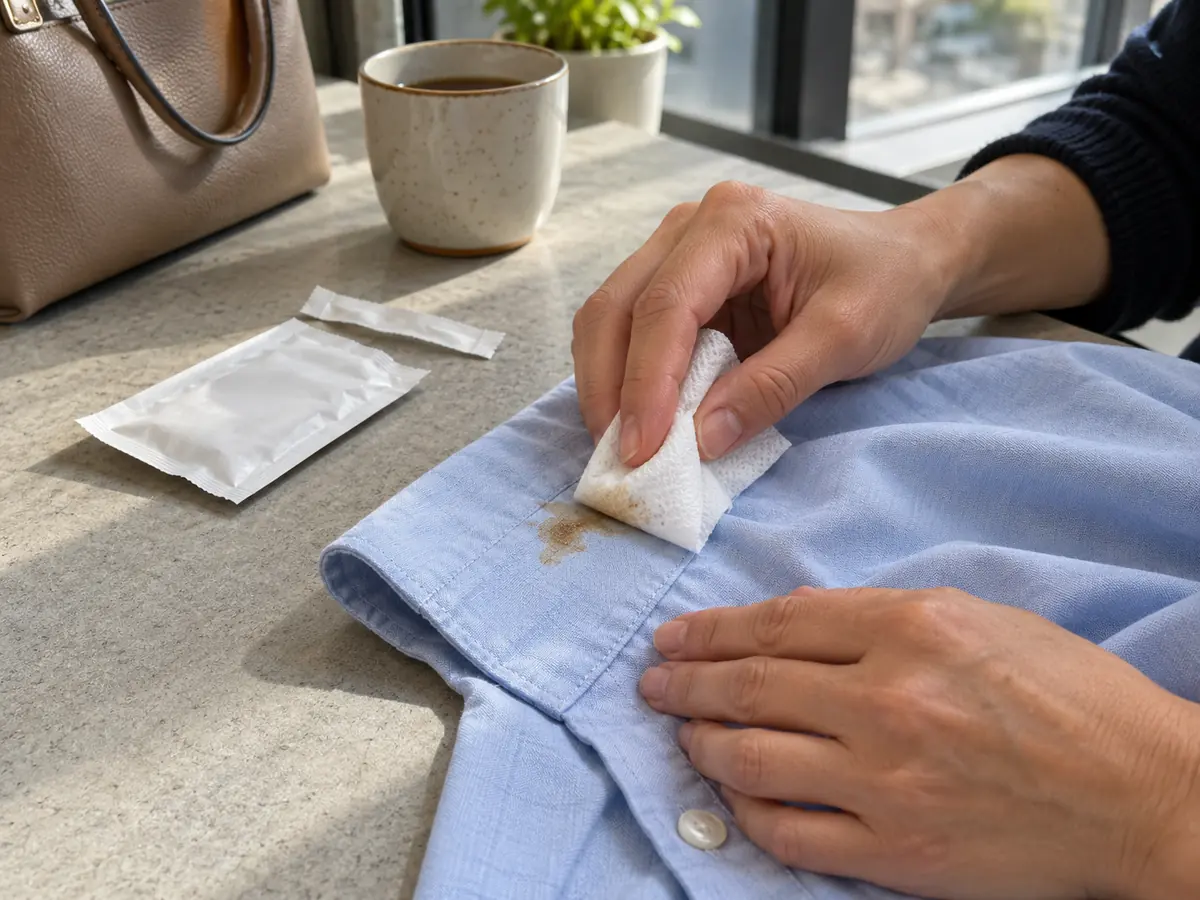
A coffee drop on a shirt just before a meeting needs attention now. A period stain found when the laundry basket is emptied that evening may be treated as part of a full wash. Both customers want the mark gone. They have very different opportunities to treat it.
For a brand developing a stain remover, that difference belongs in the brief before the package is chosen.
Instant stain removers are designed for spot treatment when a full wash is not immediately available. Pre-wash stain removers are designed to work before laundering, with the wash completing the process. Stain age matters, but it does not define the categories: a fresh stain can benefit from pretreatment, and a portable package does not automatically make a formula suitable for use without rinsing.
For private-label brands, the useful question is simple: what will the customer be able to do after applying the product?
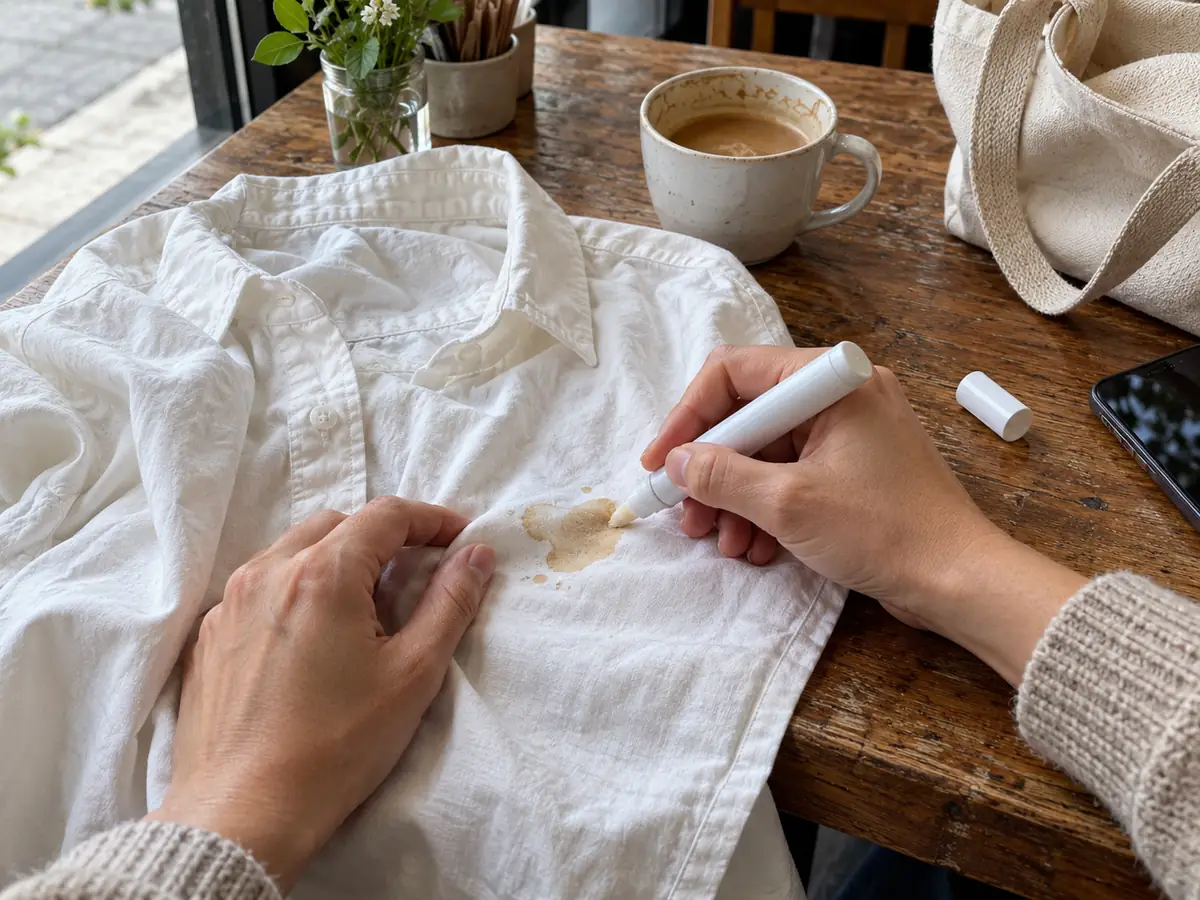
Start with the moment of use
Imagine developing a stain remover for a travel kit. The customer has a small mark on a shirt, a few spare seconds and no washing machine. Success means visibly improving that spot without leaving a distracting ring, a sticky patch or an overwhelming fragrance.
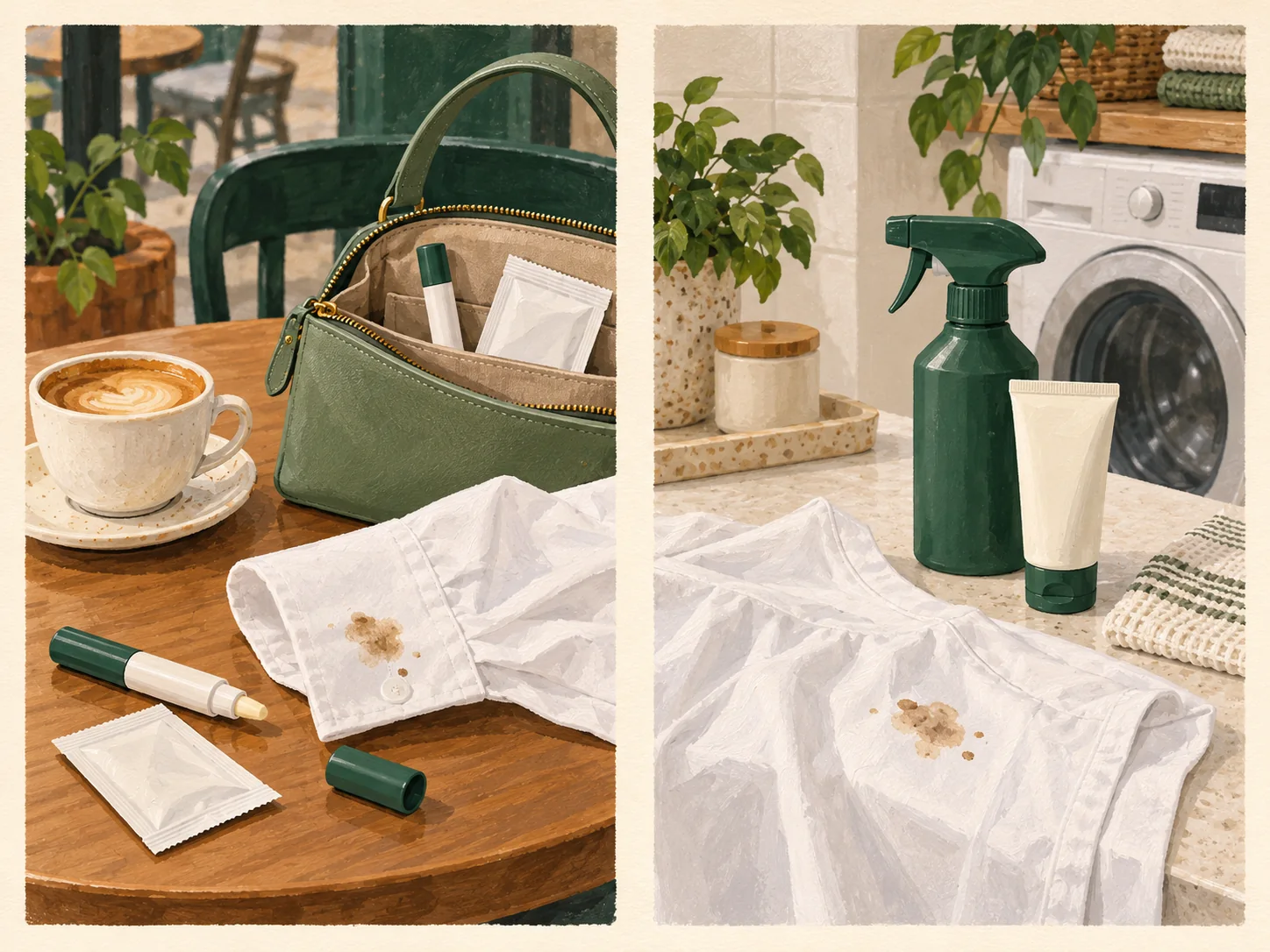
Now imagine developing one for a period-care range. The customer may be treating underwear at home, with access to water and time before the next wash. Success means helping remove the stain through the complete treatment-and-laundering routine, while respecting the garment's care requirements.
These are two different product briefs. Calling both products “powerful stain removers” hides the decisions that matter: dose, contact time, fabric compatibility and how the loosened soil leaves the garment.
For a brand, that distinction also creates clearer merchandising. A portable spot treatment belongs naturally in a travel or everyday essentials kit. A pre-wash treatment has a clear role beside laundry products or in a garment-care range. A complementary pair can make sense when customers have both needs.
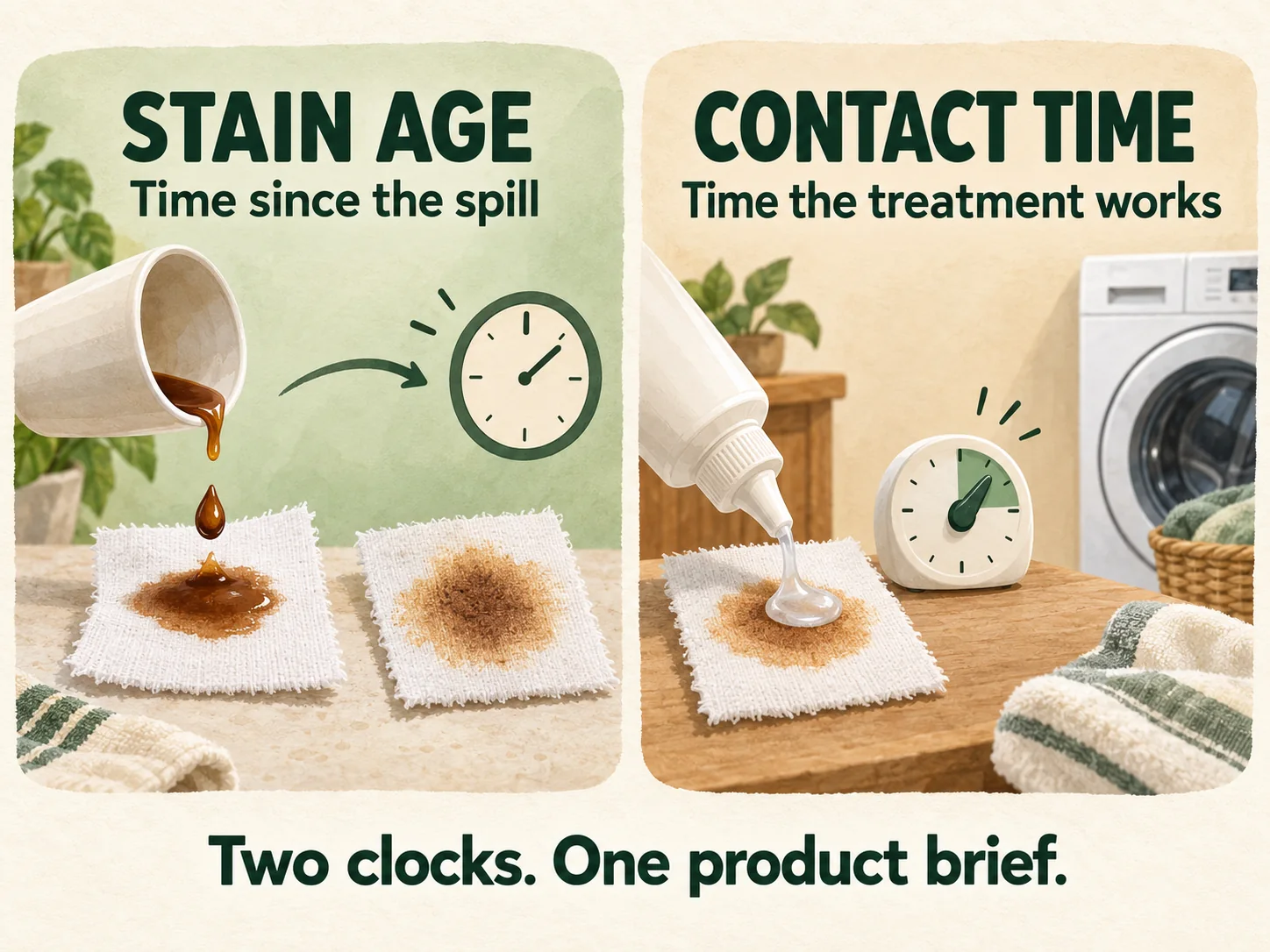
Stain removal runs on two clocks
The first clock measures how long the stain has been there. The second measures how long the treatment can work.
Treating a spill quickly is generally helpful, but there is no universal minute when a stain becomes “set.” Fabric, stain composition and previous handling all matter. A useful development brief records whether the stain is fresh, dried or already washed, rather than assigning every stain the same deadline.
The treatment clock is easier for brands to overlook. A formula evaluated after a long soak has not demonstrated what it can do during a quick blotting routine. Likewise, a five-second demonstration tells little about its performance after pretreatment and laundering.
A pre-wash label may specify a short wait, a longer dwell or a permitted delay before washing. For example, Shout Advanced Action Gel directs users to allow at least five minutes if possible, and overnight for heavy-duty stains. Those are that product's directions, not a universal schedule for all pretreaters.
Test the stain age customers will encounter and the treatment time they will actually give you. That is where a convincing product promise begins.
Instant vs. pre-wash stain removers at a glance
| Decision | Instant spot treatment | Pre-wash treatment |
|---|---|---|
| Intended moment | When laundering is unavailable | Before a hand or machine wash |
| Customer's next step | Blot or otherwise follow the spot-treatment directions | Leave for the directed time, then launder |
| Stain age | Often fresh spills; test the intended range | Fresh or older stains; test the intended range |
| Possible formats | Pens, wipes and portable sprays | Sprays, liquids, gels, sticks and soaks |
| Key development goal | Useful improvement with acceptable appearance after drying | Removal through the complete pretreatment-and-wash routine |
| Important checks | Residue, rings, color change, dosing and drying | Removal after washing, color change, rinse-out and fabric compatibility |
Packaging alone cannot answer which column a product belongs in. A spray can deliver a pre-wash gel, as the Shout example shows. A small bottle can still require laundering. The formula, directions and validated use define the product.
What changes inside the formula
Both product families can use familiar cleaning ingredients. The difference lies in how the whole system performs under its intended conditions.
Surfactants help the formula reach and loosen soil. They lower water's surface tension and help oily soil become suspended so it can be carried away. That removal step matters: cleaning a spot involves more than simply wetting it. The American Cleaning Institute's explanation of surfactants describes how this process works.
Enzymes and bleaching ingredients serve different purposes. Enzymes help break down certain soils; bleaching ingredients act on colored stains. Their presence alone does not establish how quickly a finished product works or which garments it suits. ACI's ingredient function guide is a useful introduction to these roles.
Hydrogen peroxide is an ingredient option, not the whole answer. Arkema describes its use in laundry prespotting and stain bleaching, alongside the need to manage formulation stability and ingredient compatibility. For a peroxide-wipe brief, the work still includes liquid delivery, fabric appearance and performance after storage in the sachet.
For an instant product, the development challenge includes what remains when the treated area dries. For a pre-wash product, the wash provides a further opportunity to remove loosened soil and product residue.
Texture is another design choice. A gel or semi-gel may make localized application easier, while a thinner liquid may suit a different applicator. Compare dispensing, spreading and cleaning performance together. Thickness alone is not a measure of cleaning power.
Period stains show why the use case matters
A period-care stain remover needs a more specific brief than “removes blood.” Consider when the mark is discovered, which garment is involved and whether the customer can rinse or wash it.
A spot noticed immediately on washable cotton underwear presents a different test from a dried stain on dark fabric. Period underwear adds another question: what treatments does that garment's manufacturer allow?
The American Cleaning Institute's blood-stain guidance recommends cold water for fresh blood and enzyme pretreatment or soaking for dried blood before laundering. It also advises keeping a stained item out of the dryer until the mark has been removed.
For a customer-facing routine, keep the sequence clear:
- Check the garment instructions. Choose a treatment compatible with the fabric, color and any special construction.
- Respond to fresh blood with cold water when available. A portable treatment should be used only within its stated fabric and stain scope.
- Pretreat before laundering. Apply the directed dose and use the contact time specified on the stain remover.
- Wash and inspect. If a mark remains, reassess the treatment before drying.
This use case has informed Klean Leaf's work on a semi-gel pre-wash format for period-care applications. The development direction is straightforward: localized application followed by laundering. Claims about particular fabrics, dried stains or removal speed must come from testing the finished product.
Choose packaging around the routine
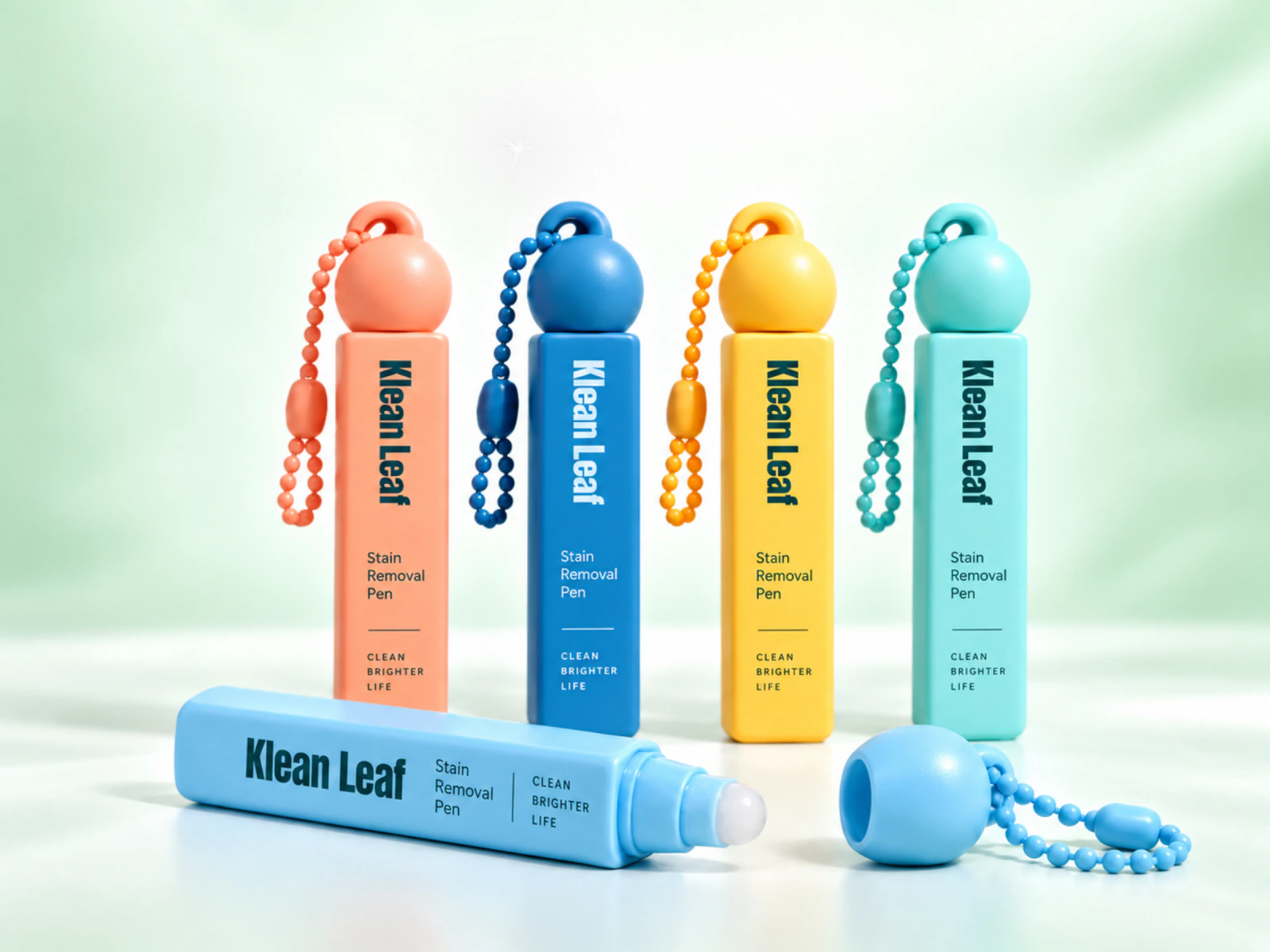
A stain remover pen offers controlled application to a small area. Test how consistently the tip dispenses, how it moves across the intended fabric and what happens after repeated use.
For applicator choices and sampling options, see our guide to developing custom stain remover pens.
Stain remover wipes combine formula delivery with a material that can pick up loosened soil. Evaluate liquid loading, wipe strength, lint and how the sachet preserves moisture during storage.
A stain remover spray can cover a wider area. Its spray pattern and dose should suit the treatment routine; a larger wet patch is not automatically a better result. Gels and semi-gels also need a dispenser that gives customers a manageable amount.
Ask suppliers to quote the complete pack specification. Minimum order quantities depend on components, decoration, filling setup and formula requirements. Custom sachet film may introduce a different minimum from the filling run; a special pen component or bottle can do the same. Compare actual options instead of assuming that one format always launches at a lower quantity.
Turn the idea into a testable product brief
Before requesting samples, agree on six points with your development partner:
- Target stains: choose a focused set, such as coffee and sauce for a portable product or blood for a period-care concept.
- Stain condition: specify fresh, dried and any previously washed stains relevant to the claim.
- Target garments: name the fiber blends, colors and special finishes customers will use it on.
- Treatment routine: define dose, application method, contact time and whether laundering follows.
- Success criteria: measure removal alongside color change, rings, residue and fabric appearance.
- Final packaging: test delivery and stability in the pack customers will receive.
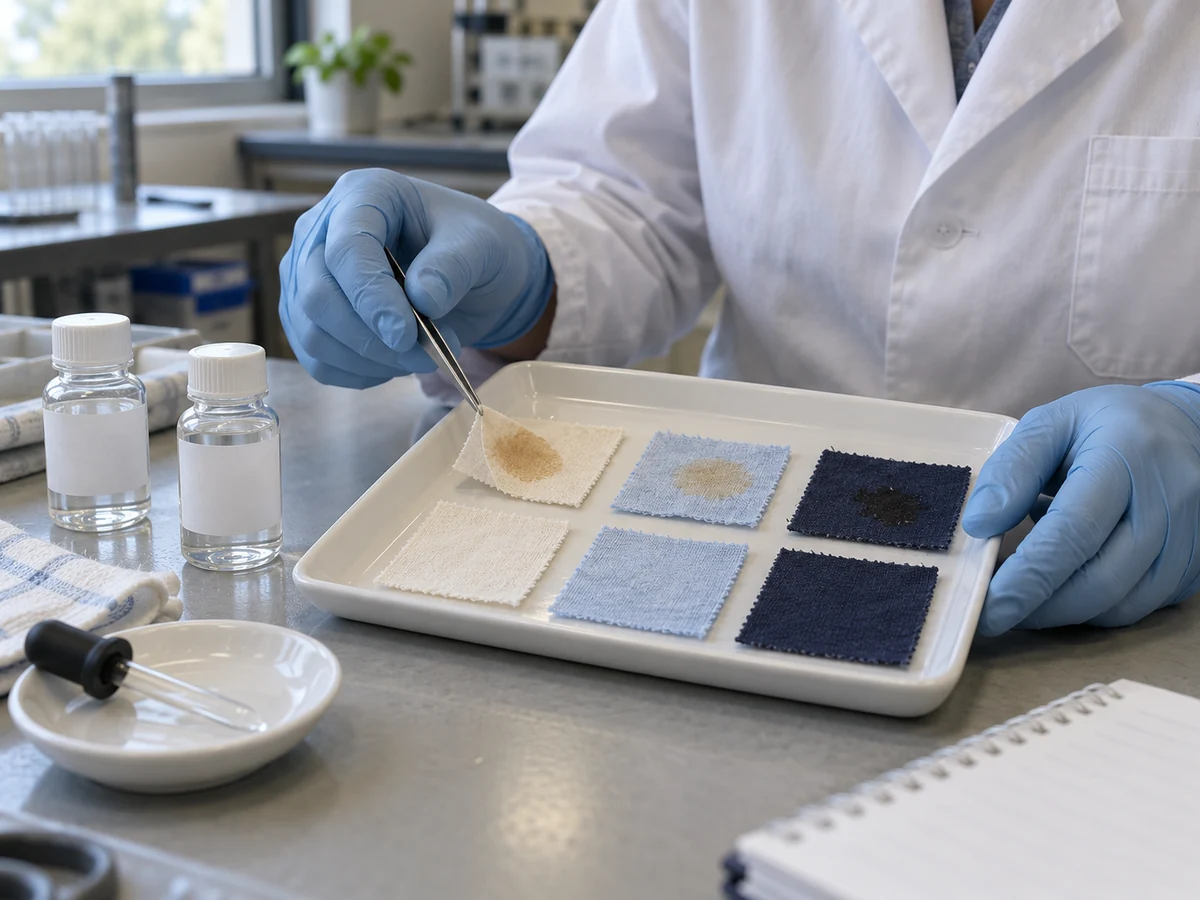
Keep comparative tests consistent. Use equivalent stain loads and fabrics, document the treatment steps and include an untreated reference. For a pre-wash product, compare against the same wash without pretreatment so you can see the product's contribution.
For an instant product, assess the fabric after it dries as well as immediately after application. For a pre-wash product, assess it after the specified wash. Repeat the important checks after storage in the final pack: a promising fresh sample is only the start of product development.
These choices also sharpen marketing. “Helps remove coffee spots when used as directed” is a testable brief. “Works on everything, instantly” gives the development team no useful boundaries and customers no reliable expectations.
Build your stain-care product around the moment
A useful stain-care range starts with a clear job: help someone deal with a spot now, prepare a garment for its next wash, or serve both moments with complementary products.
Klean Leaf develops private-label stain removal pens, wipes and sprays, alongside custom formulation projects. Tell us the stain, the garment, the expected treatment time and your packaging plans. Those details help turn a format idea into a focused development brief.
Frequently Asked Questions
Are instant stain removers only for fresh stains?
Fresh spills are a common use case, but capability depends on the product. An older stain may respond to spot treatment; performance on dried or previously washed stains needs separate evidence.
Can a pre-wash stain remover treat a fresh stain?
Yes. “Pre-wash” describes the treatment-and-laundering process, not a minimum stain age. There is no need to wait for a stain to dry before using a suitable pretreater.
Is a stain remover spray instant or pre-wash?
Either is possible. Check whether the directions call for blotting, rinsing or laundering. Bottle size and spray format do not establish the intended use.
Can a stain remover wipe remove dried period blood?
That requires testing the specific wipe, stain and fabric. Evaluate whether the intended result is an immediate improvement or removal after laundering; they are different claims.
How long should a pre-wash treatment stay on fabric?
Use the product's stated contact time and fabric restrictions. A longer wait is not automatically better, and one brand's overnight directions should not be applied to another formula.
Build Your Stain Remover Brief Around the Moment of Use
Compare pen, wipe, and spray formats, then discuss your target stains, intended fabrics, treatment routine, and sample testing with Klean Leaf.

Sources & References
- American Cleaning Institute: Stain Removal Guide
Practical blood-stain treatment and laundering guidance.
- American Cleaning Institute: The Chemistry of Cleaning
How surfactants help wet surfaces and remove soil.
- American Cleaning Institute: Ingredient Functions
The roles of enzymes, bleaching ingredients and other formulation components.
- Shout: Advanced Action Gel
A commercial example of a spray-delivered gel, with product-specific pretreatment directions.
- Arkema: Hydrogen Peroxide
Laundry prespotting applications and formulation compatibility considerations.